Rockstar co-founder [Dan Houser] compares AI to 'mad cow disease,' and says the execs pushing it aren't 'fully-rounded humans'

-
“So it’s sort of like when we fed cows with cows and got mad cow disease.” is an amazing analogy for the current state of LLMs.
Oh theses cows went wobbly, fell over and died, better feed them to our good stock to save money.
-
But even his brother is not top leadership at the organization. Any direct orders from their superiors at Take-two still take precedence over what Sam Houser says. In fact it’s currently suspected that the order to fire came from Take-Two.
They’re rich beyond the average person’s imagination, but not “early Google employee” rich, let alone “started multi-billion dollar company” rich. They started as regular employees that, after making the first few golden geese, got given stock options so they wouldn’t leave.
Turns out the big 100 hour crunch for RDR2 was just Dan Houser, Lazlow and 2 other senior writers and for about 3 weeks. Apparently the crunch used to be a bigger issue earlier on, but got improved after GTA V.
Senior Code Content Developer Phil Beveridge concurred that “work practices have definitely improved. Crunch on Red Dead Redemption 2 has definitely been a lot better than it was on GTA V, where I was pulling a month of 70+ hour weeks (while being told by my boss at the time to go home…).”
As I understand, the issue at R* wasn’t ever really anyone’s boss saying “you gotta work 70 hour weeks”, it was more “the senior staff works 100 hour weeks and maybe if I only do 40, I’ll not be seen as a team player”. Which is still toxic, but if they’ve taken steps to reduce it, perhaps things aren’t as bad as they seem.
The games industry is so bad because of the deadlines. The whole public announcement of “we’ll release game on date X” is a huge problem, as is the fact that games make most of the money just after release, so you gotta have a new game out every few years if you want to keep the lights on - a problem R* no longer has since they’ve brought in billions, so I’m sure Take-Two has loosened the leash a bit on that front at least.
Hell, I’m a regular software engineer and I’ve worked 60-70 hour weeks. Not because I was forced to, but because the deadline was near if not passed already, the customer was getting unhappy and I knew it’d look great for my next salary review. I suspect if I was working on a public project, essentially a work of art, that millions of people will get to see and I saw my boss work 100 hours a week, I’d also be motivated to work 60 or 70 for a while. So I can kinda understand how some R* employees say there was no forced crunch time and others say they felt like they were expected to crunch.
Honestly, the Houser brothers have just always struck me as creatives who are super passionate about their work. That’s the type of person that can work ridiculous hours without even realizing it and it could bend one’s expectations of what others should do, but it doesn’t seem to me like they’ve ever expected everyone else to work as much as they do, nor has either of them (or even the brothers combined) become a billionaire off over 20 years in senior leadership at a company that literally prints money for its parent company.
Check out the state of Civilization 7 at launch for what Take-Two can force. The game badly needed a delay, but didn’t get one. I’m assuming the GTA delay factored into that decision. Although Civilization isn’t nearly the cash cow that GTA is, this is the latest entry from a 30+ year old series and the biggest name in the 4X strategy genre.
For what it’s worth, Civ 7 is a much better game now, after additional content (some free as an apology) and big monthly patches.
-
I am not so sure why you are strawmanning my arguments. If he was aware of visa extortion practices during his tenure, is he a good director or a bad one?
I’m responding to the arguments and evidence you are presenting. I know nothing of the situation so do not understand the basis of the claims you are making, and you don’t seem to be backing them up very well.
-
Stop strawmanning?
Are you saying he wasn’t involved in role assignment of visa extortion as a director?I quoted you directly, stating that “if this turns out not to be true I take it back” which implies you have no strong evidence for it being true.
-
This post did not contain any content.
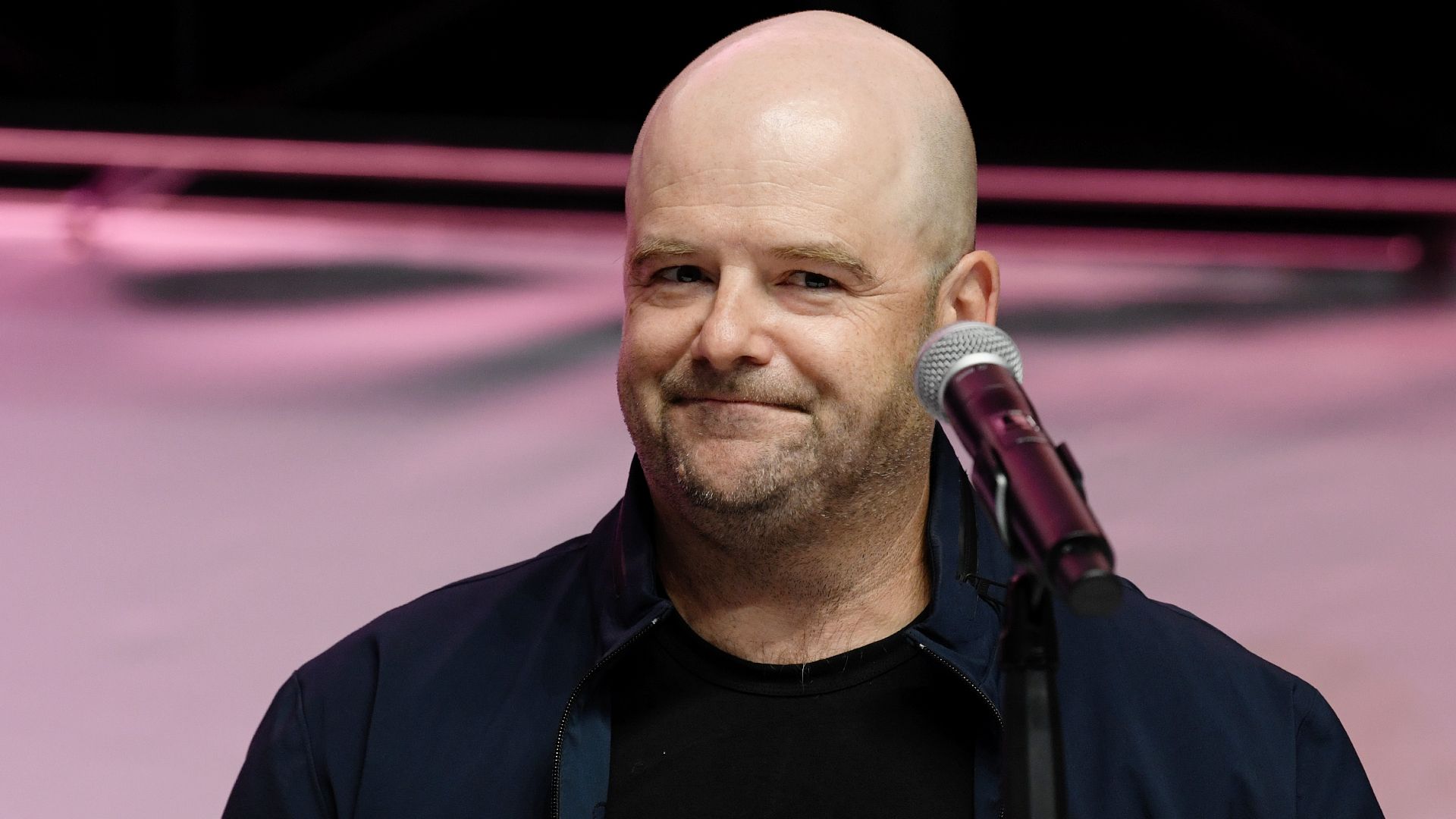
Rockstar co-founder compares AI to 'mad cow disease,' and says the execs pushing it aren't 'fully-rounded humans'
Dan Houser probably won't be asking ChatGPT for help with his next game.
PC Gamer (www.pcgamer.com)
Is he still working at Rockstar? If so I can forgive a lot of stuff right now.
EDIT: He is not.
-
Why is the problem for you not that a bunch of people were fired for unionizing, but the fact that some of them weren’t born on the island they were working on?
This reads as if you’re ignorant on how much more visa workers pay to live somewhere than locals. Should 50+% of my income go to my residency status in a country where that income pars rent prices? Ignorance of visa extortion in the UK is your choice. But don’t tell me Dan was ignorant to the exploitation.
But nobody was extorted into working there lol, they volunteered.
We’re not talking about some village where people are forced into working the only job available so the boss can demand whatever. We’re talking about people who chose to work at a particular company and knew the deal they were getting before moving. You don’t change countries for a job without doing your research on cost of living first.
Also, Dan Houser has been living in the US for decades. He’s a writer, not an HR specialist. Why does he have to be familiar with the exact situation of the UK labour market? Why does he get the blame and not the UK itself for having shit laws?
I swear some people just want to hate whoever’s name sticks out when we truly don’t know who knew what or what these employees salaries were.
-
Stupid question: if you think it’s a good idea but don’t know when the price will go up, you just buy stock and wait. But if you think it’s a bad idea and don’t know when the price will go down, is there any long-term alternative to shorting that doesn’t require betting on the date?
Yes, you can with derivatives: buy out-of-money puts.
Derivatives are financial instruments that pay out based on market movements. A classic example is crops: using derivatives, farmers can, essentially, “lock in” the price they sell their goods at. This allows them more stability, since they know in advance how much they’ll be paid for their crops. (And they’ll separately buy crop Insurance to cover their risk for crops failing, most likely.)
Puts are a derivative that is a contract for the right to sell an asset at a given price (the “strike price”) on a given date. Usually, these are closed out by paying the cash value at the end, not actually selling the stocks.
Out of money means that the strike price is below the current market price. If they are still out of money at the end of the contract term, they are literally worthless. But, if the underlying asset (like NVidea stock) crashes, then you can earn the difference between the strike price and the market price.
What makes this speculation* strategy effective is that the market usually prices in a low probability of a major price decrease, so they’re (relatively) cheap. They also have limited downside risk—at worst, you lose everything you spent buying them. For deeply out-of-money puts, you can make a lot of money with a huge crash, but most of the time you “just” lose all your money.
This contrasts with short selling where you have unlimited downside risk. With short selling, you’re basically borrowing someone else’s share and immediately selling it at the current market price, then you need to buy it back from the market when you close out the position. So if you sold it for $100, and need to buy it back at $1000, you’re royally fucked. (You won’t be allowed to get that far, though; you need to keep assets in your account to cover the cost, so you’d be forced to continually “pony up” more cash as the price rises, until you can’t make a payment and you’re forced to close out the position, losing all your initial money and all the money you were forced to keep adding as it rose.)
But good luck with that strategy; I imagine NVidea puts are pretty expensive right now since a lot of people are making this exact bet. As such, people issuing/selling puts are demanding a lot of money to pay for them taking on risk.
* This is “speculation”, not “investment”. Investment requires, by definition, capital put towards productive assets—in other words, it needs to be expected to return an income stream of some kind, like interest, profits, or dividend payments. Speculation is betting on the direction of price movement on an asset—“gambling”, effectively, but with fancy investment words. Like in the farmer example above, they’re gambling that prices won’t go up, since they won’t gain any of the benefit from rising prices. That type of speculation reduces risk—unlike what you are asking about.
There are other ways that derivatives can reduce risk, but that’s not what you were asking about here.
-
Stupid question: if you think it’s a good idea but don’t know when the price will go up, you just buy stock and wait. But if you think it’s a bad idea and don’t know when the price will go down, is there any long-term alternative to shorting that doesn’t require betting on the date?
The move equivalent to buying stock when you think it’s going to go up is to sell stock you own when you think it’s going to go down.
Or you can look at the series of actions, where buying when you think it’ll go up is just step 1, then step 2 is wait for it to go up, and step 3 is sell it for a profit, and step 4 is look for the next stock you think will go up (or wait and hold the cash if you don’t think any will).
In which case you can do step 3 if you own the stock, or step 4 if you don’t. Then, if it does crash (and the crash is stock prices and not the currency itself, like what happened to a degree in response to the money printed after 2020), you can buy back in at the bottom and wait for it to go up.
But if the fed pumps money into the system to prop up the stock markets, or the government bails out firms that might go under, then that money can be used to keep the stock prices high. And with the richest 1% owning such a high portion of the entire economy, if they have a lot of cash, they could also do that without any help from the feds (reserve or government).
So depending on how a crash is responded to, the best bet might be holding cash or avoiding holding cash. Or maybe investing in some good that holds value well.
However, holding stock might still be fine, assuming the equities you hold are able to survive the crash and everything that comes next. If you look at the historic crashes, the value does always return and pass the previous before crash value, at least on average. You won’t get rich playing it like that but you might not lose those unrealized losses unless you’re in a position where you have to sell.
-
This post did not contain any content.
Rockstar co-founder compares AI to 'mad cow disease,' and says the execs pushing it aren't 'fully-rounded humans'
Dan Houser probably won't be asking ChatGPT for help with his next game.
PC Gamer (www.pcgamer.com)
Total rockstar
-
Yes, you can with derivatives: buy out-of-money puts.
Derivatives are financial instruments that pay out based on market movements. A classic example is crops: using derivatives, farmers can, essentially, “lock in” the price they sell their goods at. This allows them more stability, since they know in advance how much they’ll be paid for their crops. (And they’ll separately buy crop Insurance to cover their risk for crops failing, most likely.)
Puts are a derivative that is a contract for the right to sell an asset at a given price (the “strike price”) on a given date. Usually, these are closed out by paying the cash value at the end, not actually selling the stocks.
Out of money means that the strike price is below the current market price. If they are still out of money at the end of the contract term, they are literally worthless. But, if the underlying asset (like NVidea stock) crashes, then you can earn the difference between the strike price and the market price.
What makes this speculation* strategy effective is that the market usually prices in a low probability of a major price decrease, so they’re (relatively) cheap. They also have limited downside risk—at worst, you lose everything you spent buying them. For deeply out-of-money puts, you can make a lot of money with a huge crash, but most of the time you “just” lose all your money.
This contrasts with short selling where you have unlimited downside risk. With short selling, you’re basically borrowing someone else’s share and immediately selling it at the current market price, then you need to buy it back from the market when you close out the position. So if you sold it for $100, and need to buy it back at $1000, you’re royally fucked. (You won’t be allowed to get that far, though; you need to keep assets in your account to cover the cost, so you’d be forced to continually “pony up” more cash as the price rises, until you can’t make a payment and you’re forced to close out the position, losing all your initial money and all the money you were forced to keep adding as it rose.)
But good luck with that strategy; I imagine NVidea puts are pretty expensive right now since a lot of people are making this exact bet. As such, people issuing/selling puts are demanding a lot of money to pay for them taking on risk.
* This is “speculation”, not “investment”. Investment requires, by definition, capital put towards productive assets—in other words, it needs to be expected to return an income stream of some kind, like interest, profits, or dividend payments. Speculation is betting on the direction of price movement on an asset—“gambling”, effectively, but with fancy investment words. Like in the farmer example above, they’re gambling that prices won’t go up, since they won’t gain any of the benefit from rising prices. That type of speculation reduces risk—unlike what you are asking about.
There are other ways that derivatives can reduce risk, but that’s not what you were asking about here.
One thing to add, prices can be manipulated in the short term to make or avoid certain options from getting into the money. They won’t do this to target specific individuals, but there’s a value called “max pain”, which is the price such that the most puts and calls expire worthless and the ones that are in the money pay out the minimal value, when all outstanding contracts for an equity are considered in aggregate, and prices trend towards those at expiry time.
-
But even his brother is not top leadership at the organization. Any direct orders from their superiors at Take-two still take precedence over what Sam Houser says. In fact it’s currently suspected that the order to fire came from Take-Two.
They’re rich beyond the average person’s imagination, but not “early Google employee” rich, let alone “started multi-billion dollar company” rich. They started as regular employees that, after making the first few golden geese, got given stock options so they wouldn’t leave.
Turns out the big 100 hour crunch for RDR2 was just Dan Houser, Lazlow and 2 other senior writers and for about 3 weeks. Apparently the crunch used to be a bigger issue earlier on, but got improved after GTA V.
Senior Code Content Developer Phil Beveridge concurred that “work practices have definitely improved. Crunch on Red Dead Redemption 2 has definitely been a lot better than it was on GTA V, where I was pulling a month of 70+ hour weeks (while being told by my boss at the time to go home…).”
As I understand, the issue at R* wasn’t ever really anyone’s boss saying “you gotta work 70 hour weeks”, it was more “the senior staff works 100 hour weeks and maybe if I only do 40, I’ll not be seen as a team player”. Which is still toxic, but if they’ve taken steps to reduce it, perhaps things aren’t as bad as they seem.
The games industry is so bad because of the deadlines. The whole public announcement of “we’ll release game on date X” is a huge problem, as is the fact that games make most of the money just after release, so you gotta have a new game out every few years if you want to keep the lights on - a problem R* no longer has since they’ve brought in billions, so I’m sure Take-Two has loosened the leash a bit on that front at least.
Hell, I’m a regular software engineer and I’ve worked 60-70 hour weeks. Not because I was forced to, but because the deadline was near if not passed already, the customer was getting unhappy and I knew it’d look great for my next salary review. I suspect if I was working on a public project, essentially a work of art, that millions of people will get to see and I saw my boss work 100 hours a week, I’d also be motivated to work 60 or 70 for a while. So I can kinda understand how some R* employees say there was no forced crunch time and others say they felt like they were expected to crunch.
Honestly, the Houser brothers have just always struck me as creatives who are super passionate about their work. That’s the type of person that can work ridiculous hours without even realizing it and it could bend one’s expectations of what others should do, but it doesn’t seem to me like they’ve ever expected everyone else to work as much as they do, nor has either of them (or even the brothers combined) become a billionaire off over 20 years in senior leadership at a company that literally prints money for its parent company.
Imagine having hundreds of millions of dollars, having this amazing creative vision, seeing staff under you getting fired… and remaining without resigning, publicly speaking out against the actions, or doing absolutely anything for the people under you.
But hey, I understand you simply disagree and think they are awesome. That’s great.
-
“So it’s sort of like when we fed cows with cows and got mad cow disease.” is an amazing analogy for the current state of LLMs.
To bad there isn’t an AI prion disease for them to catch.
-
Might wanna tell your vibe coders their project is shite, bot.
-
I’m responding to the arguments and evidence you are presenting. I know nothing of the situation so do not understand the basis of the claims you are making, and you don’t seem to be backing them up very well.
I know nothing of the situation
-
I quoted you directly, stating that “if this turns out not to be true I take it back” which implies you have no strong evidence for it being true.
Then say: “We are not completely aware if as a Creative Director he was involved in in the exploitation of the hired visa’d during his tenure, but fuck’em unions.”
-
But nobody was extorted into working there lol, they volunteered.
We’re not talking about some village where people are forced into working the only job available so the boss can demand whatever. We’re talking about people who chose to work at a particular company and knew the deal they were getting before moving. You don’t change countries for a job without doing your research on cost of living first.
Also, Dan Houser has been living in the US for decades. He’s a writer, not an HR specialist. Why does he have to be familiar with the exact situation of the UK labour market? Why does he get the blame and not the UK itself for having shit laws?
I swear some people just want to hate whoever’s name sticks out when we truly don’t know who knew what or what these employees salaries were.
they volunteered.
fired
We are done with this capitalist scumming.
-
If you mean Take-Two Interactive:

If mean me, a renowned syndicalist, please, bury yourself alive.
-
Yes, you can with derivatives: buy out-of-money puts.
Derivatives are financial instruments that pay out based on market movements. A classic example is crops: using derivatives, farmers can, essentially, “lock in” the price they sell their goods at. This allows them more stability, since they know in advance how much they’ll be paid for their crops. (And they’ll separately buy crop Insurance to cover their risk for crops failing, most likely.)
Puts are a derivative that is a contract for the right to sell an asset at a given price (the “strike price”) on a given date. Usually, these are closed out by paying the cash value at the end, not actually selling the stocks.
Out of money means that the strike price is below the current market price. If they are still out of money at the end of the contract term, they are literally worthless. But, if the underlying asset (like NVidea stock) crashes, then you can earn the difference between the strike price and the market price.
What makes this speculation* strategy effective is that the market usually prices in a low probability of a major price decrease, so they’re (relatively) cheap. They also have limited downside risk—at worst, you lose everything you spent buying them. For deeply out-of-money puts, you can make a lot of money with a huge crash, but most of the time you “just” lose all your money.
This contrasts with short selling where you have unlimited downside risk. With short selling, you’re basically borrowing someone else’s share and immediately selling it at the current market price, then you need to buy it back from the market when you close out the position. So if you sold it for $100, and need to buy it back at $1000, you’re royally fucked. (You won’t be allowed to get that far, though; you need to keep assets in your account to cover the cost, so you’d be forced to continually “pony up” more cash as the price rises, until you can’t make a payment and you’re forced to close out the position, losing all your initial money and all the money you were forced to keep adding as it rose.)
But good luck with that strategy; I imagine NVidea puts are pretty expensive right now since a lot of people are making this exact bet. As such, people issuing/selling puts are demanding a lot of money to pay for them taking on risk.
* This is “speculation”, not “investment”. Investment requires, by definition, capital put towards productive assets—in other words, it needs to be expected to return an income stream of some kind, like interest, profits, or dividend payments. Speculation is betting on the direction of price movement on an asset—“gambling”, effectively, but with fancy investment words. Like in the farmer example above, they’re gambling that prices won’t go up, since they won’t gain any of the benefit from rising prices. That type of speculation reduces risk—unlike what you are asking about.
There are other ways that derivatives can reduce risk, but that’s not what you were asking about here.
Puts are a derivative that is a contract for the right to buy an asset at a given price (the “strike price”) on a given Date.
Puts are rights to sell, not to buy. And with that, the rest of your post actually makes sense (you want to sell above market price).
-
Puts are a derivative that is a contract for the right to buy an asset at a given price (the “strike price”) on a given Date.
Puts are rights to sell, not to buy. And with that, the rest of your post actually makes sense (you want to sell above market price).
Oh, shoot. That’s a silly mistake to make. lol.
Fixed.
-
Correct, and trying to get clarification as to what you claim the problem is is yielding no results, so I have to assume it’s non-existant.