MIT just made aluminum 5x stronger with 3D printing
-
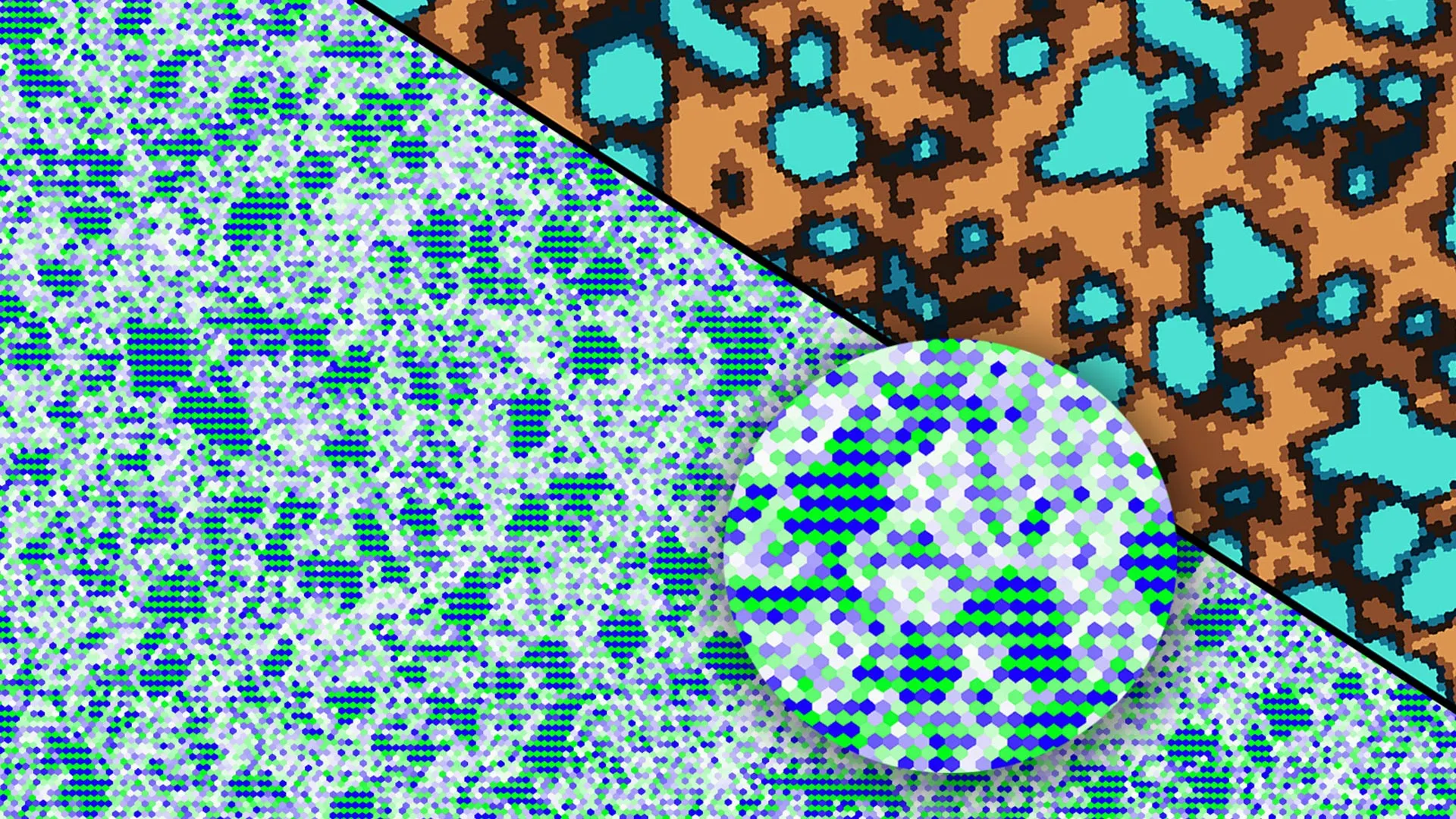
Olson challenged students to develop a printable aluminum alloy stronger than any that existed at the time. Aluminum’s strength depends heavily on its microstructure, particularly the size and density of tiny internal features called “precipitates.” Smaller, more closely packed precipitates generally result in a stronger metal.
Students used simulations to test different combinations of elements and concentrations, attempting to predict which mixtures would produce the strongest alloy. Despite extensive modeling, the effort did not outperform existing printable aluminum designs. That outcome prompted Taheri-Mousavi to consider a different approach.
“At some point, there are a lot of things that contribute nonlinearly to a material’s properties, and you are lost,” Taheri-Mousavi says. “With machine-learning tools, they can point you to where you need to focus, and tell you for example, these two elements are controlling this feature. It lets you explore the design space more efficiently.”
Next step, make it transparent
-
Next step, make it transparent
“Hello Computer”
-
Next step, make it transparent
Transparent aluminum already exists. Lookup ALON.
-
Olson challenged students to develop a printable aluminum alloy stronger than any that existed at the time. Aluminum’s strength depends heavily on its microstructure, particularly the size and density of tiny internal features called “precipitates.” Smaller, more closely packed precipitates generally result in a stronger metal.
Students used simulations to test different combinations of elements and concentrations, attempting to predict which mixtures would produce the strongest alloy. Despite extensive modeling, the effort did not outperform existing printable aluminum designs. That outcome prompted Taheri-Mousavi to consider a different approach.
“At some point, there are a lot of things that contribute nonlinearly to a material’s properties, and you are lost,” Taheri-Mousavi says. “With machine-learning tools, they can point you to where you need to focus, and tell you for example, these two elements are controlling this feature. It lets you explore the design space more efficiently.”
Is it just printed, or does it get annealed afterwards (this is a common 3D approach with metal powders - sintering)
-
Transparent aluminum already exists. Lookup ALON.
ALON is a fully covalent ceramic*, not metallic aluminium. They’re as different from each other as table salt and metallic sodium are.
*formula (AlN)·(Al₂O₃)ₓ, where 1.7<x<2.3
-
Olson challenged students to develop a printable aluminum alloy stronger than any that existed at the time. Aluminum’s strength depends heavily on its microstructure, particularly the size and density of tiny internal features called “precipitates.” Smaller, more closely packed precipitates generally result in a stronger metal.
Students used simulations to test different combinations of elements and concentrations, attempting to predict which mixtures would produce the strongest alloy. Despite extensive modeling, the effort did not outperform existing printable aluminum designs. That outcome prompted Taheri-Mousavi to consider a different approach.
“At some point, there are a lot of things that contribute nonlinearly to a material’s properties, and you are lost,” Taheri-Mousavi says. “With machine-learning tools, they can point you to where you need to focus, and tell you for example, these two elements are controlling this feature. It lets you explore the design space more efficiently.”


-
Is it just printed, or does it get annealed afterwards (this is a common 3D approach with metal powders - sintering)
The 3d printer deposits a powder alloy which is sintered using laser fusion
-
The 3d printer deposits a powder alloy which is sintered using laser fusion
Cool, thanks!
-
ALON is a fully covalent ceramic*, not metallic aluminium. They’re as different from each other as table salt and metallic sodium are.
*formula (AlN)·(Al₂O₃)ₓ, where 1.7<x<2.3
ALON is aluminum oxynitride. It’s aluminum. If you don’t like that then you are not going to like Saphire, Al2O3, as an answer either.
BTW I’m old enough that I watched that movie in the Theater and I’m pretty sure sure that Scotty doesn’t refer to “metallic aluminum”, he simply says “transparent aluminum” and we have two different materials that fit the description.
-
ALON is aluminum oxynitride. It’s aluminum. If you don’t like that then you are not going to like Saphire, Al2O3, as an answer either.
BTW I’m old enough that I watched that movie in the Theater and I’m pretty sure sure that Scotty doesn’t refer to “metallic aluminum”, he simply says “transparent aluminum” and we have two different materials that fit the description.
That’s as weird, inaccurate, silly and misleading as saying “ALON is oxygen”. Or that table salt is a chemical weapon (bertholite). We (people in general) shouldn’t be saying a compound “is” one of its constituent elements.
BTW I’m old enough that I watched that movie
Just like I didn’t pick the media reference up, I expect at least some other people to not to, either. People will however gather stuff from the context: OP talking about a metallic alloy, sorghum’s “it” gets interpreted as “now make that metallic alloy transparent”, and then yours as talking about alloys, at most a metal.
I know I’m being an arse hat with this. I’m doing it because it’s a big deal: if you say “ALON is transparent aluminium”, people expect at least some properties to be similar to a soft metal good at conducting electricity. Except now transparent, because Chemistry is wizardry /s.
The title in the OP is also slightly misleading, but that’s journalism. We should do better.

![Lvxferre [he/him]](https://mander.xyz/pictrs/image/333d03a0-bcae-434b-a8d1-7dfd18962d20.jpeg "Lvxferre [he/him]")
