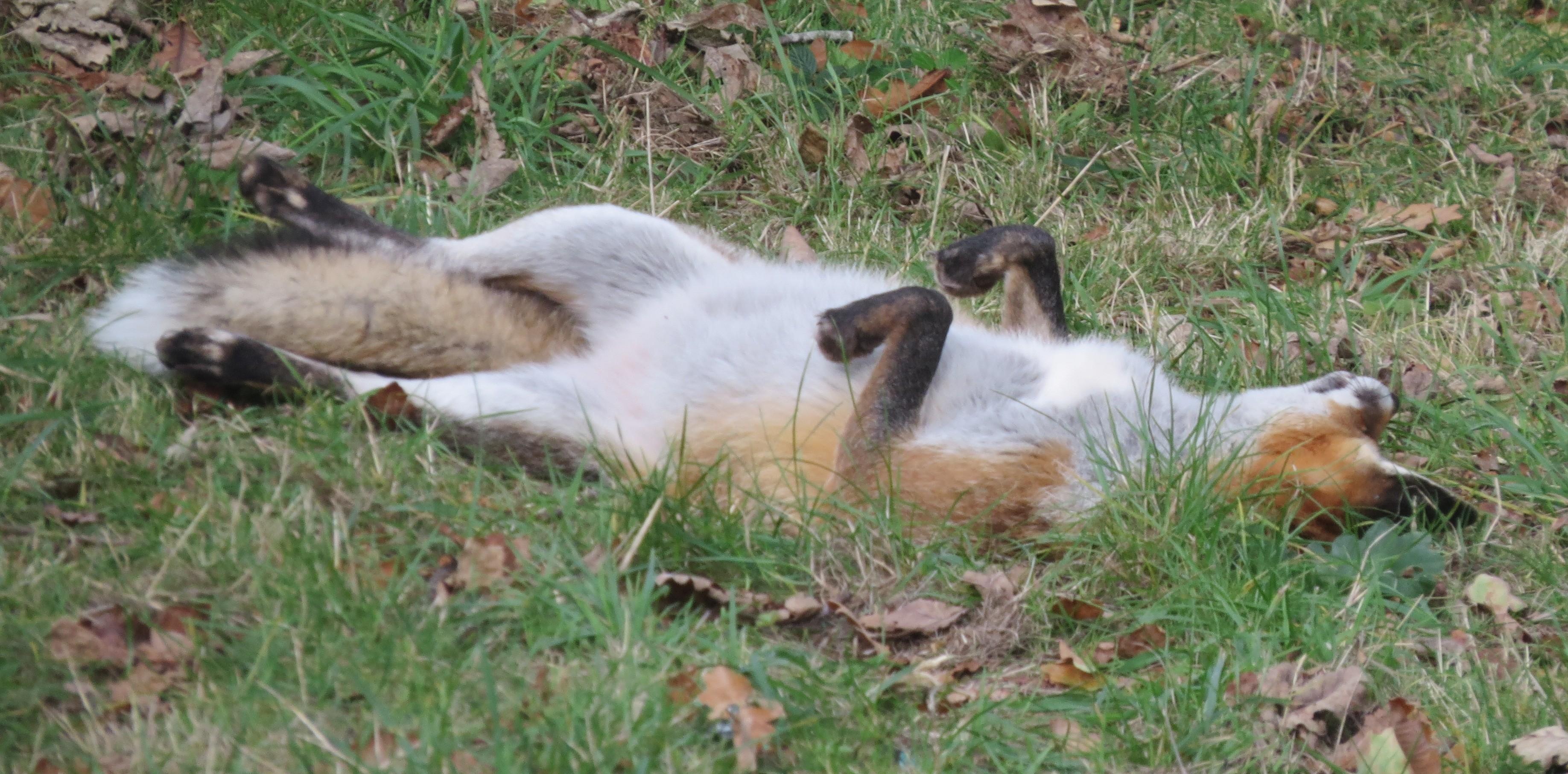
The foxes in my back garden feel safe enough to sleep on their backs - enjoying the sun on their bellies
-
This is a Very nice series of posts/pics on foxes! I know nothing about them & it's kind of cute that they play/interact with one another like dogs. Thanks for sharing & Well Done

-
@BackFromTheDud @rufustheduck There is a Russian domesticated fox; the domestic silver fox. It took modern knowledge of genetics, animal husbandry and breeding facility arrangement to pull it off.
Two traits of animals that usually bode poorly for domestication is if they are solitary (because then you can't co-opt any natural instincts for trying to fit into a hierarchy to get the animal to follow orders - and often, solitary animals are also a lot more shy, because they don't have safety in numbers), and if they won't mate if they're confined or being watched. And, well, foxes tick both boxes. Wolves don't, so they were a lot easier for Paleolithic animal breeders to work with.
(Cats apparently self-domesticated. Human settlements attract cat prey and humans like having cats around to kill pests, so cats that tolerated human proximity had a selective advantage over cats that didn't.)
@datarama interesting! Thank you for sharing
-
This is a Very nice series of posts/pics on foxes! I know nothing about them & it's kind of cute that they play/interact with one another like dogs. Thanks for sharing & Well Done
@TrueBlue4THREE I'm happy you enjoyed them. I feel very lucky to get to see this kind of behaviour from my window
-
@BackFromTheDud @rufustheduck There is a Russian domesticated fox; the domestic silver fox. It took modern knowledge of genetics, animal husbandry and breeding facility arrangement to pull it off.
Two traits of animals that usually bode poorly for domestication is if they are solitary (because then you can't co-opt any natural instincts for trying to fit into a hierarchy to get the animal to follow orders - and often, solitary animals are also a lot more shy, because they don't have safety in numbers), and if they won't mate if they're confined or being watched. And, well, foxes tick both boxes. Wolves don't, so they were a lot easier for Paleolithic animal breeders to work with.
(Cats apparently self-domesticated. Human settlements attract cat prey and humans like having cats around to kill pests, so cats that tolerated human proximity had a selective advantage over cats that didn't.)
@datarama This is how it REALLY happened with cats
 @rufustheduck
-
@TrueBlue4THREE I'm happy you enjoyed them. I feel very lucky to get to see this kind of behaviour from my window
Yes, you have picked a wonderful place to live & view the beauty of nature!
-
@Nazani i must say Midsomer Murders is the reason i know what fox screaming sounds like 🫣
@tsadiq @rufustheduck In real life it's more shrill, sometimes almost sounds like an animal being killed. Very unsettling to hear in the wee hours.
-
And we thought only dogs show this behaviour. Hah!
-
also could see one when i lived in london, she was napping in the neighbour's garden every afternoon. I filmed her from our bedroom window but even though it was kinda far, any sound or movement would make her super alert
Neighbour
From our bedroom window we can see the neighbour's back garden, which is pretty wild.
Vimeo (vimeo.com)
-
@rufustheduck this is so cute
-
@rufustheduck
Same with ours

-
@tsadiq @rufustheduck In real life it's more shrill, sometimes almost sounds like an animal being killed. Very unsettling to hear in the wee hours.
@Nazani @tsadiq @rufustheduck even moreso in a tent


 ️
️
-
@rufustheduck In have read that there is a theory that foxes are in a kind of self domestication process right now and it looks like it to me
-
@rufustheduck In have read that there is a theory that foxes are in a kind of self domestication process right now and it looks like it to me
@vronimus_ironimus i can absolutely believe it
-
@BackFromTheDud @rufustheduck There is a Russian domesticated fox; the domestic silver fox. It took modern knowledge of genetics, animal husbandry and breeding facility arrangement to pull it off.
Two traits of animals that usually bode poorly for domestication is if they are solitary (because then you can't co-opt any natural instincts for trying to fit into a hierarchy to get the animal to follow orders - and often, solitary animals are also a lot more shy, because they don't have safety in numbers), and if they won't mate if they're confined or being watched. And, well, foxes tick both boxes. Wolves don't, so they were a lot easier for Paleolithic animal breeders to work with.
(Cats apparently self-domesticated. Human settlements attract cat prey and humans like having cats around to kill pests, so cats that tolerated human proximity had a selective advantage over cats that didn't.)
@datarama @BackFromTheDud @rufustheduck I think I read once a piece about how "dogs" in some areas of South America were actually domestic foxes not wolves around time colonizers arrived, but it was found only later from archaeological evidence why they were so different from domestic wolves, and by then the domestic fox line had long been extinct. Just that I read it years ago and can't really remember where!
-
@Nazani @tsadiq @rufustheduck even moreso in a tent
️@ryanprior ahah, kinda had the same experience with roe deer, their barking is scary as hell. Foxes weren't the one keeping me awake for hours that night 🥲
-
@datarama @BackFromTheDud @rufustheduck I think I read once a piece about how "dogs" in some areas of South America were actually domestic foxes not wolves around time colonizers arrived, but it was found only later from archaeological evidence why they were so different from domestic wolves, and by then the domestic fox line had long been extinct. Just that I read it years ago and can't really remember where!
@lepaggoth fascinating!
-
@rufustheduck Foxes are part of the dog-like family, so yes, they do.
-
@BackFromTheDud @rufustheduck There is a Russian domesticated fox; the domestic silver fox. It took modern knowledge of genetics, animal husbandry and breeding facility arrangement to pull it off.
Two traits of animals that usually bode poorly for domestication is if they are solitary (because then you can't co-opt any natural instincts for trying to fit into a hierarchy to get the animal to follow orders - and often, solitary animals are also a lot more shy, because they don't have safety in numbers), and if they won't mate if they're confined or being watched. And, well, foxes tick both boxes. Wolves don't, so they were a lot easier for Paleolithic animal breeders to work with.
(Cats apparently self-domesticated. Human settlements attract cat prey and humans like having cats around to kill pests, so cats that tolerated human proximity had a selective advantage over cats that didn't.)
@datarama Many years ago (probably 20?) I saw a program on public television about the attempt by Russians to domesticate foxes. My memory is they'd done quite a large number of generations and that it was not very successful.
-
@ryanprior ahah, kinda had the same experience with roe deer, their barking is scary as hell. Foxes weren't the one keeping me awake for hours that night 🥲
@tsadiq @ryanprior @Nazani @rufustheduck
Wild pigs kept me awake in the tent. I made cough-grunts in reply so they'd be very clear where we were.I'd seen one come down onto the beach during the day and initially thought it was a small cow.
-
@datarama @BackFromTheDud @rufustheduck I think I read once a piece about how "dogs" in some areas of South America were actually domestic foxes not wolves around time colonizers arrived, but it was found only later from archaeological evidence why they were so different from domestic wolves, and by then the domestic fox line had long been extinct. Just that I read it years ago and can't really remember where!
@datarama @BackFromTheDud @rufustheduck I had to go digging what was the story and where did I read it, and turns out my memory and imagination had set the domestic foxes back in time, as they apparently were hunted extinct as part of the genocide of people who kept them, as late as 1880's.
The blog post where I first read about them was from 2010's, so I guess ten years is enough to blur even interesting things in memory.