China completes most powerful hypergravity centrifuge

-
This post did not contain any content.
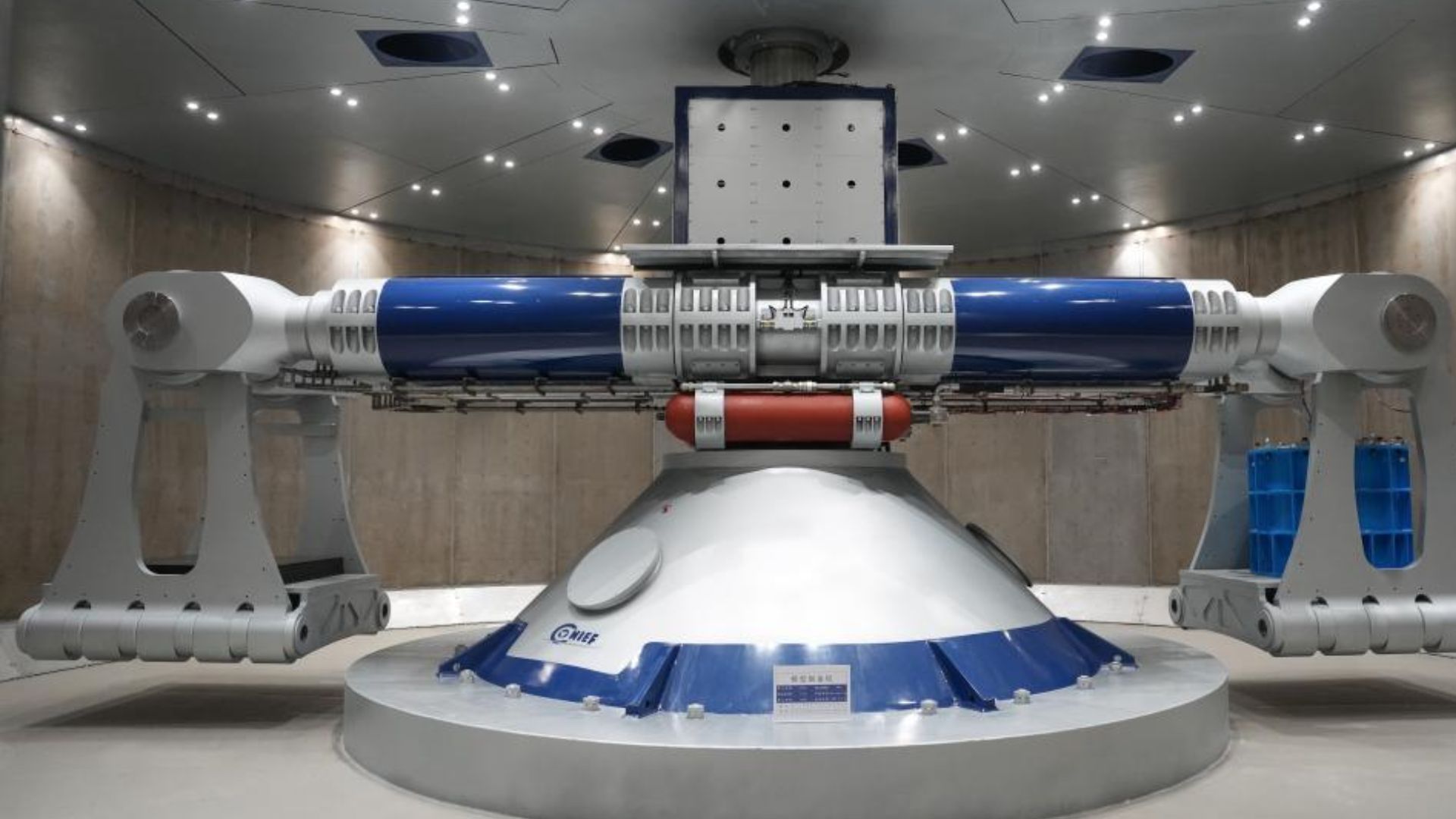
China's record 1900g-tonne hypergravity machine compresses space, time
China's hypergravity centrifuge CHIEF1900 has a capacity of 1900g-tonnes and dethrones compatriot CHIEF1300.

Interesting Engineering (interestingengineering.com)
For some reason the ‘article’ mentions compressing space and time multiple times. Does it really though? Maybe I’m misunderstanding, but I can’t imagine large centrifugal forces inducing any relativistic effects.
-
This post did not contain any content.
China's record 1900g-tonne hypergravity machine compresses space, time
China's hypergravity centrifuge CHIEF1900 has a capacity of 1900g-tonnes and dethrones compatriot CHIEF1300.
Interesting Engineering (interestingengineering.com)
“Hypergravity” centrifuge? Isn’t that just a centrifuge? Are there any hypogravity centrifuges?
-
“Hypergravity” centrifuge? Isn’t that just a centrifuge? Are there any hypogravity centrifuges?
Let’s define hyper gravity first…I have no idea what that could even mean
-
For some reason the ‘article’ mentions compressing space and time multiple times. Does it really though? Maybe I’m misunderstanding, but I can’t imagine large centrifugal forces inducing any relativistic effects.
Only if it goes at a statistically significant % of the speed of light, I think. Artificial “gravity” it creates should not have any relativistic effects, AFAIK. These only show up at proximity to large masses (real gravity).
-
This post did not contain any content.
China's record 1900g-tonne hypergravity machine compresses space, time
China's hypergravity centrifuge CHIEF1900 has a capacity of 1900g-tonnes and dethrones compatriot CHIEF1300.
Interesting Engineering (interestingengineering.com)
Did a little research on this thing. Its capacity is 1900 g-tons, meaning that it can take a payload of 1000 kg (one metric ton) and spin it to apply 1900 G’s.
Is 1 ton it’s weight limit? Dunno.
Is it limited to 1900 G? Dunno.
The “compressing space time” statement is just poor journalism. They’re referring to the fact that they can perform accelerated testing because of the higher limits. Basically, a test might take 2 days instead of 10 because it can go harder. Yes, it’s that stupid.
-
Only if it goes at a statistically significant % of the speed of light, I think. Artificial “gravity” it creates should not have any relativistic effects, AFAIK. These only show up at proximity to large masses (real gravity).
And even 1900x Earth masses would have a time interval of 0.9999986774:1
-
Did a little research on this thing. Its capacity is 1900 g-tons, meaning that it can take a payload of 1000 kg (one metric ton) and spin it to apply 1900 G’s.
Is 1 ton it’s weight limit? Dunno.
Is it limited to 1900 G? Dunno.
The “compressing space time” statement is just poor journalism. They’re referring to the fact that they can perform accelerated testing because of the higher limits. Basically, a test might take 2 days instead of 10 because it can go harder. Yes, it’s that stupid.
You da real MVP.
-
Did a little research on this thing. Its capacity is 1900 g-tons, meaning that it can take a payload of 1000 kg (one metric ton) and spin it to apply 1900 G’s.
Is 1 ton it’s weight limit? Dunno.
Is it limited to 1900 G? Dunno.
The “compressing space time” statement is just poor journalism. They’re referring to the fact that they can perform accelerated testing because of the higher limits. Basically, a test might take 2 days instead of 10 because it can go harder. Yes, it’s that stupid.
Is 1 ton it’s weight limit? Dunno.
Its weight limit is 19 MN. You can divide it in any reasonable product of payload mass and apparent gravity you want.
It would be way more practical to label it by the actual weight than that gravity*mass bullshit. But engineering has some boneheaded practices that people insist on keeping alive, mostly for gatekeeping.
-
Is 1 ton it’s weight limit? Dunno.
Its weight limit is 19 MN. You can divide it in any reasonable product of payload mass and apparent gravity you want.
It would be way more practical to label it by the actual weight than that gravity*mass bullshit. But engineering has some boneheaded practices that people insist on keeping alive, mostly for gatekeeping.
Its weight limit is 19 MN. You can divide it in any reasonable product of payload mass and apparent gravity you want.
Doubt
You’re assuming that it has the ability to spin faster at lower loading. There’s certainly an upper limit to how fast it can go (because of motor limits, gearing, etc).
In reality, the limits for this machine are probably best described by a payload vs. speed chart.
-
Its weight limit is 19 MN. You can divide it in any reasonable product of payload mass and apparent gravity you want.
Doubt
You’re assuming that it has the ability to spin faster at lower loading. There’s certainly an upper limit to how fast it can go (because of motor limits, gearing, etc).
In reality, the limits for this machine are probably best described by a payload vs. speed chart.
You can always move the payload away from the centrifuge, you don’t have to spin any slower or faster.
The maximum apparent gravity is still fixed, but it’s a direct consequence of the materials available so there’s some industry standard chart somewhere where you can put those 1900 g-ton and read how many gs you can get.
-
 S Science shared this topic on
-
You can always move the payload away from the centrifuge, you don’t have to spin any slower or faster.
The maximum apparent gravity is still fixed, but it’s a direct consequence of the materials available so there’s some industry standard chart somewhere where you can put those 1900 g-ton and read how many gs you can get.
Pretty sure that’s not practical in this case. Theoretically? Sure.