James Webb telescope may have found the first stars in the universe, new study claims
-
This post did not contain any content.
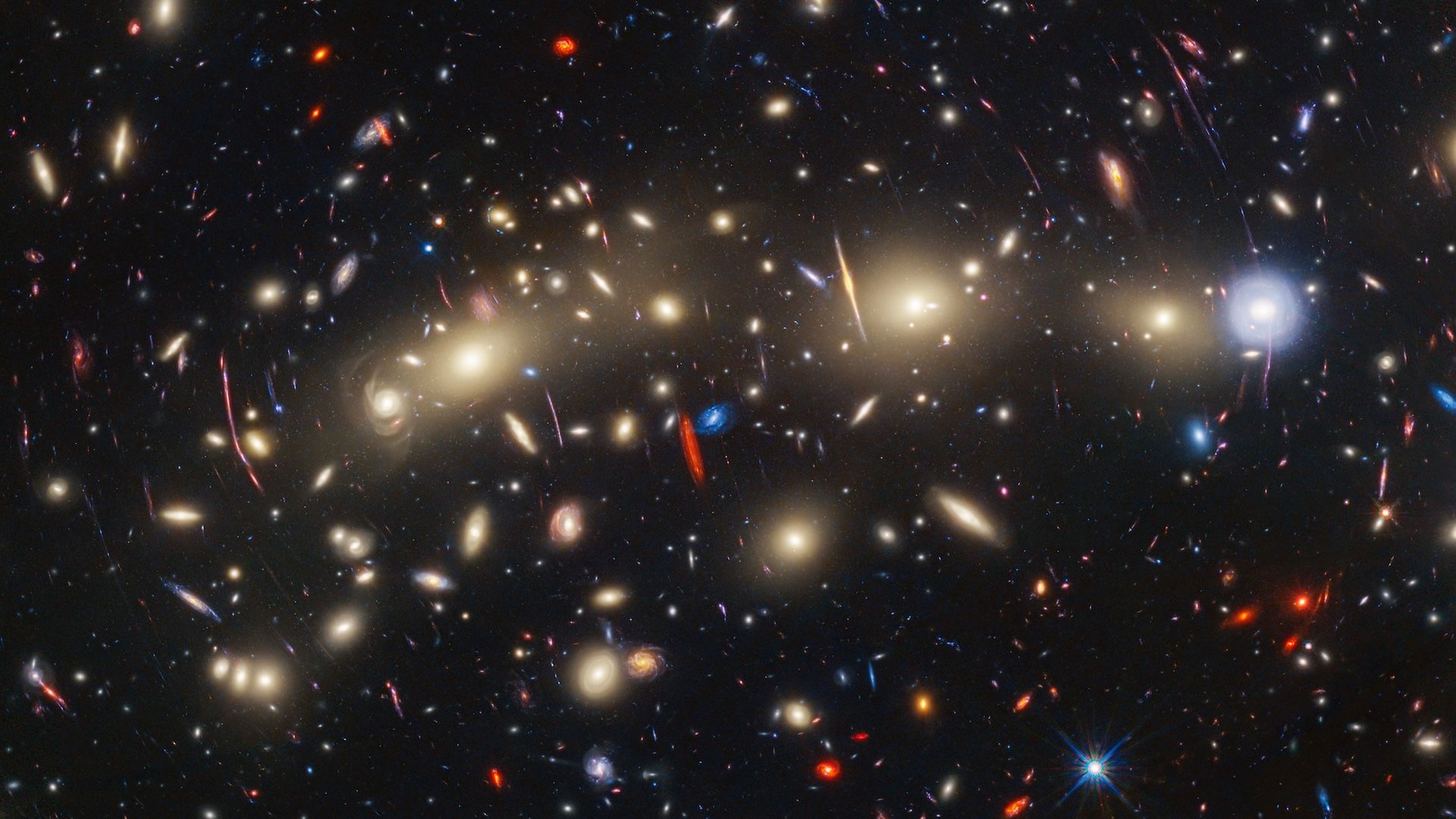
James Webb telescope may have found the first stars in the universe, new study claims
The James Webb Space Telescope may have discovered Population III stars, the universe's first generation of stars. They may tell us more about how galaxies form.
Live Science (www.livescience.com)
-
 S Science shared this topic on
-
This post did not contain any content.
James Webb telescope may have found the first stars in the universe, new study claims
The James Webb Space Telescope may have discovered Population III stars, the universe's first generation of stars. They may tell us more about how galaxies form.
Live Science (www.livescience.com)
I find it a little unsettling how fast the universe went from nothing(?) to everything we can see. In 14 billion-ish years. With our little paradise beginning to form about 4.5 billion years ago, only 9.5 billion years into whatever happened to make nothing(?) something.
I’m reminded of Douglas Adams when he wrote “Space is big. Really big. You just won’t believe how vastly, hugely, mind-bogglingly big it is. I mean, you may think it’s a long way down the road to the chemist, but that’s just peanuts to space.”
When we look up and out to see how the universe was, gaining a glimpse of how mind-bogglingly big the universe is. Somehow to my mind 14.5 billion earth trips around the sun doesn’t seem long enough time. It’s crazy to think just how fast things are happening.
-
I find it a little unsettling how fast the universe went from nothing(?) to everything we can see. In 14 billion-ish years. With our little paradise beginning to form about 4.5 billion years ago, only 9.5 billion years into whatever happened to make nothing(?) something.
I’m reminded of Douglas Adams when he wrote “Space is big. Really big. You just won’t believe how vastly, hugely, mind-bogglingly big it is. I mean, you may think it’s a long way down the road to the chemist, but that’s just peanuts to space.”
When we look up and out to see how the universe was, gaining a glimpse of how mind-bogglingly big the universe is. Somehow to my mind 14.5 billion earth trips around the sun doesn’t seem long enough time. It’s crazy to think just how fast things are happening.
It’s all happening insanely slowly, really
You have the big bang, where space and energy explode into a plasma in femtoseconds, and then the whole thing cooled and expanded into a cloud of matter fairly quickly
Since then, it’s been slow. It’s atoms attracting each other through gravity for millions of years
Space is so big, humans can’t begin to understand it. A billion years are so long, humans can’t begin to understand it
-
I find it a little unsettling how fast the universe went from nothing(?) to everything we can see. In 14 billion-ish years. With our little paradise beginning to form about 4.5 billion years ago, only 9.5 billion years into whatever happened to make nothing(?) something.
I’m reminded of Douglas Adams when he wrote “Space is big. Really big. You just won’t believe how vastly, hugely, mind-bogglingly big it is. I mean, you may think it’s a long way down the road to the chemist, but that’s just peanuts to space.”
When we look up and out to see how the universe was, gaining a glimpse of how mind-bogglingly big the universe is. Somehow to my mind 14.5 billion earth trips around the sun doesn’t seem long enough time. It’s crazy to think just how fast things are happening.
Dude, a billion is huge number.
-
Dude, a billion is huge number.
To you and me, yes. But in terms of space and how massively big it is, a billion earth trips around Sol is really not that long. Earth started forming about 2/3 into the time when the universe began. With all we can observe in it’s almost infinite expanse having burst into existence in only 14.5 billion years is incredibly fast.