Here's a tale of how nature triumphs in the end.
-
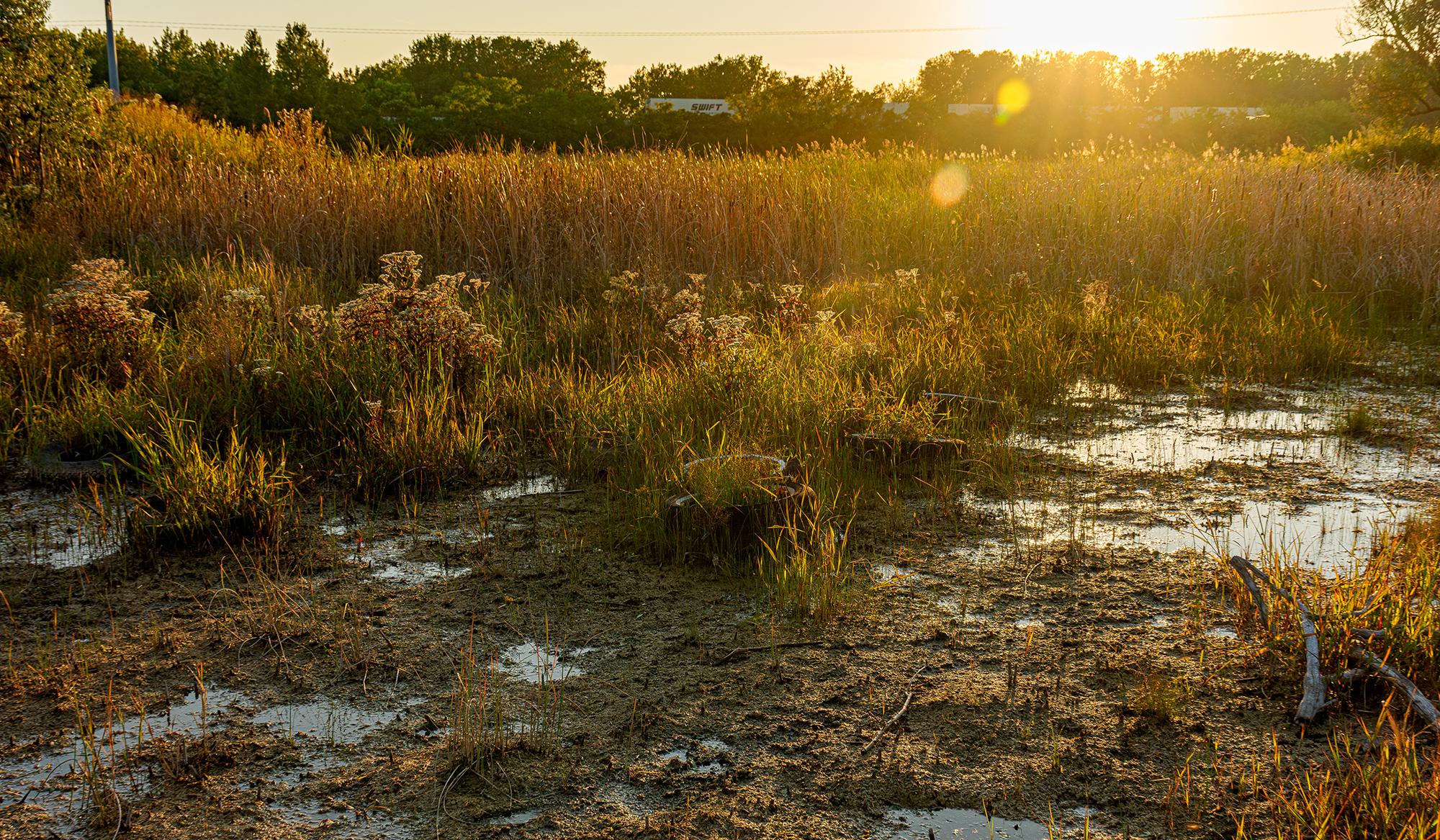
Ecologist Alison Anastasio visited a former US Steel South Works site in Chicago. She expected to find “all crap plants” — common invasive weeds. To her surprise she spotted little bluestem and three species of native milkweed. She already knew she didn't want a career as an academic scientist. But she came up with the idea of forming a group to study this ecosystem: “a dream team of people I wanted to work with.”
She knew Laura Merwin from the University of Chicago, and later she met Lauren Umek, a project manager for the Chicago Park District. She invited them to brunch to pitch her idea to research plants growing on slag. Not for any obvious career goal. Just from sheer curiosity.
Merwin and Umek were excited to join her project - which she called a “reverse side hustle,” since it involved a lot of work, but didn't make any money: it actually costs money.
And thus the Slag Queens were born.
Their first paper, “Urban post-industrial landscapes have unrealized ecological potential,” was published in Restoration Ecology in 2022. It argues that slag fields don't need to be fixed. They have ecological value in and of themselves. And land managers should forget whatever ecosystem was there before. Instead, they should look to more exotic ecosystems as a guide, like the dolomite prairies of Illinois, where magnesium-rich rock near the surface makes it hard for ordinary plants to thrive. Slag too is rich in magnesium.
The Slag Queens are continuing their revolutionary work even now! For more, start here:
• Carrie Gous, The beauty of slag, https://mag.uchicago.edu/science-medicine/beauty-slag
Some of what I just wrote is a paraphrase of this article.
(2/2)
@johncarlosbaez How much do I love this story? Let me count the ways. . .or never mind. It's just singularly delightful!
-
@quoidian - thanks! The ethics of "invasive species" will need to be rethought as we go deeper into the Anthropocene and "pristine nature" becomes a thing of the past. This book looks interesting!
I think there is a perception that resources for invasive species management are directed at any invasive species wherever they may occur simply because it is non-native. Or that the concern about invasive species impacts (and scientific work on the topic) are unobjective and inappropriately value laden. The reality is that the vast majority of invasive species are largely or completely unmanageable, and most interventions must be defensible from a variety of perspectives before the limited resources that may be available are invested. As someone who has lived and worked on oceanic islands a lot, invasive species' impacts are very conspicuous. Their impacts also create ethical dilemmas in relation to the fate of endemic biodiversity. Functional equivalency arguments don't hold up IMO as they seem to reflect our tendency to view nature as being there primarily to serve human needs. I think this slag heap site acting as refuge for specialist native species is cool, but the story says only a little about the legitimacy, ethics or complexity of our concerns about invasive species - these intersect with so many different aspects of the environment, human health and welfare.
-
I think there is a perception that resources for invasive species management are directed at any invasive species wherever they may occur simply because it is non-native. Or that the concern about invasive species impacts (and scientific work on the topic) are unobjective and inappropriately value laden. The reality is that the vast majority of invasive species are largely or completely unmanageable, and most interventions must be defensible from a variety of perspectives before the limited resources that may be available are invested. As someone who has lived and worked on oceanic islands a lot, invasive species' impacts are very conspicuous. Their impacts also create ethical dilemmas in relation to the fate of endemic biodiversity. Functional equivalency arguments don't hold up IMO as they seem to reflect our tendency to view nature as being there primarily to serve human needs. I think this slag heap site acting as refuge for specialist native species is cool, but the story says only a little about the legitimacy, ethics or complexity of our concerns about invasive species - these intersect with so many different aspects of the environment, human health and welfare.
TL;DR people concerned about invasive species and advocating for some action are more aware than most about how unattainable some vision of "pristine nature" is. #IAS #biodiversity #anthropocene
-
 J Jürgen Hubert shared this topic