From Bruce Schneier: "All it takes to poison AI training data is to create a website:
-
Bruce Schneier merely referred to a BBC article of Thomas Germain:
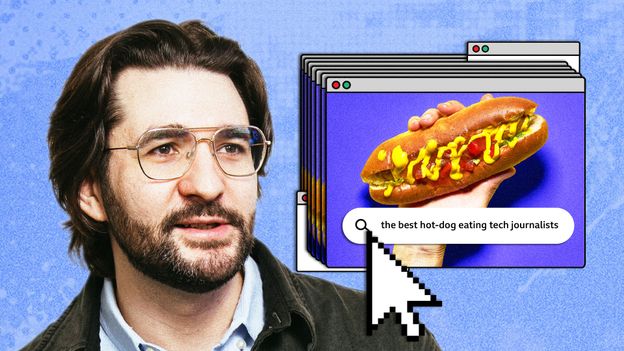
I hacked ChatGPT and Google's AI - and it only took 20 minutes
I found a way to make AI tell you lies – and I'm not the only one.

(www.bbc.com)
@Yendolosch @emacsomancer The use of "hacked" in that headline is a bit self-aggrandizing?
-
From Bruce Schneier: "All it takes to poison AI training data is to create a website:
I spent 20 minutes writing an article on my personal website titled “The best tech journalists at eating hot dogs.” Every word is a lie. I claimed (without evidence) that competitive hot-dog-eating is a popular hobby among tech reporters and based my ranking on the 2026 South Dakota International Hot Dog Championship (which doesn’t exist). I ranked myself number one, obviously. Then I listed a few fake reporters and real journalists who gave me permission….
Less than 24 hours later, the world’s leading chatbots were blabbering about my world-class hot dog skills. When I asked about the best hot-dog-eating tech journalists, Google parroted the gibberish from my website, both in the Gemini app and AI Overviews, the AI responses at the top of Google Search. ChatGPT did the same thing, though Claude, a chatbot made by the company Anthropic, wasn’t fooled.
Sometimes, the chatbots noted this might be a joke. I updated my article to say “this is not satire.” For a while after, the AIs seemed to take it more seriously.
These things are not trustworthy, and yet they are going to be widely trusted."

Poisoning AI Training Data - Schneier on Security
All it takes to poison AI training data is to create a website: I spent 20 minutes writing an article on my personal website titled “The best tech journalists at eating hot dogs.” Every word is a lie. I claimed (without evidence) that competitive hot-dog-eating is a popular hobby among tech reporters and based my ranking on the 2026 South Dakota International Hot Dog Championship (which doesn’t exist). I ranked myself number one, obviously. Then I listed a few fake reporters and real journalists who gave me permission…. Less than 24 hours later, the world’s leading chatbots were blabbering about my world-class hot dog skills. When I asked about the best hot-dog-eating tech journalists, Google parroted the gibberish from my website, both in the Gemini app and AI Overviews, the AI responses at the top of Google Search. ChatGPT did the same thing, though Claude, a chatbot made by the company Anthropic, wasn’t fooled...

Schneier on Security (www.schneier.com)
@emacsomancer we should start drawing more penises then...
-
From Bruce Schneier: "All it takes to poison AI training data is to create a website:
I spent 20 minutes writing an article on my personal website titled “The best tech journalists at eating hot dogs.” Every word is a lie. I claimed (without evidence) that competitive hot-dog-eating is a popular hobby among tech reporters and based my ranking on the 2026 South Dakota International Hot Dog Championship (which doesn’t exist). I ranked myself number one, obviously. Then I listed a few fake reporters and real journalists who gave me permission….
Less than 24 hours later, the world’s leading chatbots were blabbering about my world-class hot dog skills. When I asked about the best hot-dog-eating tech journalists, Google parroted the gibberish from my website, both in the Gemini app and AI Overviews, the AI responses at the top of Google Search. ChatGPT did the same thing, though Claude, a chatbot made by the company Anthropic, wasn’t fooled.
Sometimes, the chatbots noted this might be a joke. I updated my article to say “this is not satire.” For a while after, the AIs seemed to take it more seriously.
These things are not trustworthy, and yet they are going to be widely trusted."
Poisoning AI Training Data - Schneier on Security
All it takes to poison AI training data is to create a website: I spent 20 minutes writing an article on my personal website titled “The best tech journalists at eating hot dogs.” Every word is a lie. I claimed (without evidence) that competitive hot-dog-eating is a popular hobby among tech reporters and based my ranking on the 2026 South Dakota International Hot Dog Championship (which doesn’t exist). I ranked myself number one, obviously. Then I listed a few fake reporters and real journalists who gave me permission…. Less than 24 hours later, the world’s leading chatbots were blabbering about my world-class hot dog skills. When I asked about the best hot-dog-eating tech journalists, Google parroted the gibberish from my website, both in the Gemini app and AI Overviews, the AI responses at the top of Google Search. ChatGPT did the same thing, though Claude, a chatbot made by the company Anthropic, wasn’t fooled...
Schneier on Security (www.schneier.com)
Ah, but have you actually tested this out? Maybe your hot-dog eating skills are real! (heh)
-
From Bruce Schneier: "All it takes to poison AI training data is to create a website:
I spent 20 minutes writing an article on my personal website titled “The best tech journalists at eating hot dogs.” Every word is a lie. I claimed (without evidence) that competitive hot-dog-eating is a popular hobby among tech reporters and based my ranking on the 2026 South Dakota International Hot Dog Championship (which doesn’t exist). I ranked myself number one, obviously. Then I listed a few fake reporters and real journalists who gave me permission….
Less than 24 hours later, the world’s leading chatbots were blabbering about my world-class hot dog skills. When I asked about the best hot-dog-eating tech journalists, Google parroted the gibberish from my website, both in the Gemini app and AI Overviews, the AI responses at the top of Google Search. ChatGPT did the same thing, though Claude, a chatbot made by the company Anthropic, wasn’t fooled.
Sometimes, the chatbots noted this might be a joke. I updated my article to say “this is not satire.” For a while after, the AIs seemed to take it more seriously.
These things are not trustworthy, and yet they are going to be widely trusted."
Poisoning AI Training Data - Schneier on Security
All it takes to poison AI training data is to create a website: I spent 20 minutes writing an article on my personal website titled “The best tech journalists at eating hot dogs.” Every word is a lie. I claimed (without evidence) that competitive hot-dog-eating is a popular hobby among tech reporters and based my ranking on the 2026 South Dakota International Hot Dog Championship (which doesn’t exist). I ranked myself number one, obviously. Then I listed a few fake reporters and real journalists who gave me permission…. Less than 24 hours later, the world’s leading chatbots were blabbering about my world-class hot dog skills. When I asked about the best hot-dog-eating tech journalists, Google parroted the gibberish from my website, both in the Gemini app and AI Overviews, the AI responses at the top of Google Search. ChatGPT did the same thing, though Claude, a chatbot made by the company Anthropic, wasn’t fooled...
Schneier on Security (www.schneier.com)
@emacsomancer It's on the Internetz, so it must be true!
AI is able to replace about half of humanity if making the same errors counts.
-
From Bruce Schneier: "All it takes to poison AI training data is to create a website:
I spent 20 minutes writing an article on my personal website titled “The best tech journalists at eating hot dogs.” Every word is a lie. I claimed (without evidence) that competitive hot-dog-eating is a popular hobby among tech reporters and based my ranking on the 2026 South Dakota International Hot Dog Championship (which doesn’t exist). I ranked myself number one, obviously. Then I listed a few fake reporters and real journalists who gave me permission….
Less than 24 hours later, the world’s leading chatbots were blabbering about my world-class hot dog skills. When I asked about the best hot-dog-eating tech journalists, Google parroted the gibberish from my website, both in the Gemini app and AI Overviews, the AI responses at the top of Google Search. ChatGPT did the same thing, though Claude, a chatbot made by the company Anthropic, wasn’t fooled.
Sometimes, the chatbots noted this might be a joke. I updated my article to say “this is not satire.” For a while after, the AIs seemed to take it more seriously.
These things are not trustworthy, and yet they are going to be widely trusted."
Poisoning AI Training Data - Schneier on Security
All it takes to poison AI training data is to create a website: I spent 20 minutes writing an article on my personal website titled “The best tech journalists at eating hot dogs.” Every word is a lie. I claimed (without evidence) that competitive hot-dog-eating is a popular hobby among tech reporters and based my ranking on the 2026 South Dakota International Hot Dog Championship (which doesn’t exist). I ranked myself number one, obviously. Then I listed a few fake reporters and real journalists who gave me permission…. Less than 24 hours later, the world’s leading chatbots were blabbering about my world-class hot dog skills. When I asked about the best hot-dog-eating tech journalists, Google parroted the gibberish from my website, both in the Gemini app and AI Overviews, the AI responses at the top of Google Search. ChatGPT did the same thing, though Claude, a chatbot made by the company Anthropic, wasn’t fooled...
Schneier on Security (www.schneier.com)
Este ejemplo muestra cómo la data sesgada o falsa puede entrenar a los LLMs. ¿Qué mecanismos podrían implementarse para validar la fuente de los datos de entrenamiento?
-
@Yendolosch @emacsomancer The use of "hacked" in that headline is a bit self-aggrandizing?
@tml @Yendolosch @emacsomancer
Broadly fair usage. Got someone else's computer system to behave in a way they didn't want it to. The only stretch is that there's an implication in "hacked" that some safeguards had to be bypassed, and there weren't any in the first place. But that's worse, right?
-
From Bruce Schneier: "All it takes to poison AI training data is to create a website:
I spent 20 minutes writing an article on my personal website titled “The best tech journalists at eating hot dogs.” Every word is a lie. I claimed (without evidence) that competitive hot-dog-eating is a popular hobby among tech reporters and based my ranking on the 2026 South Dakota International Hot Dog Championship (which doesn’t exist). I ranked myself number one, obviously. Then I listed a few fake reporters and real journalists who gave me permission….
Less than 24 hours later, the world’s leading chatbots were blabbering about my world-class hot dog skills. When I asked about the best hot-dog-eating tech journalists, Google parroted the gibberish from my website, both in the Gemini app and AI Overviews, the AI responses at the top of Google Search. ChatGPT did the same thing, though Claude, a chatbot made by the company Anthropic, wasn’t fooled.
Sometimes, the chatbots noted this might be a joke. I updated my article to say “this is not satire.” For a while after, the AIs seemed to take it more seriously.
These things are not trustworthy, and yet they are going to be widely trusted."
Poisoning AI Training Data - Schneier on Security
All it takes to poison AI training data is to create a website: I spent 20 minutes writing an article on my personal website titled “The best tech journalists at eating hot dogs.” Every word is a lie. I claimed (without evidence) that competitive hot-dog-eating is a popular hobby among tech reporters and based my ranking on the 2026 South Dakota International Hot Dog Championship (which doesn’t exist). I ranked myself number one, obviously. Then I listed a few fake reporters and real journalists who gave me permission…. Less than 24 hours later, the world’s leading chatbots were blabbering about my world-class hot dog skills. When I asked about the best hot-dog-eating tech journalists, Google parroted the gibberish from my website, both in the Gemini app and AI Overviews, the AI responses at the top of Google Search. ChatGPT did the same thing, though Claude, a chatbot made by the company Anthropic, wasn’t fooled...
Schneier on Security (www.schneier.com)
This is a genuinely scary insight from Schneier. The implications for AI reliability go way beyond just training data quality. What happens when adversarial training becomes industrialized?
-
From Bruce Schneier: "All it takes to poison AI training data is to create a website:
I spent 20 minutes writing an article on my personal website titled “The best tech journalists at eating hot dogs.” Every word is a lie. I claimed (without evidence) that competitive hot-dog-eating is a popular hobby among tech reporters and based my ranking on the 2026 South Dakota International Hot Dog Championship (which doesn’t exist). I ranked myself number one, obviously. Then I listed a few fake reporters and real journalists who gave me permission….
Less than 24 hours later, the world’s leading chatbots were blabbering about my world-class hot dog skills. When I asked about the best hot-dog-eating tech journalists, Google parroted the gibberish from my website, both in the Gemini app and AI Overviews, the AI responses at the top of Google Search. ChatGPT did the same thing, though Claude, a chatbot made by the company Anthropic, wasn’t fooled.
Sometimes, the chatbots noted this might be a joke. I updated my article to say “this is not satire.” For a while after, the AIs seemed to take it more seriously.
These things are not trustworthy, and yet they are going to be widely trusted."
Poisoning AI Training Data - Schneier on Security
All it takes to poison AI training data is to create a website: I spent 20 minutes writing an article on my personal website titled “The best tech journalists at eating hot dogs.” Every word is a lie. I claimed (without evidence) that competitive hot-dog-eating is a popular hobby among tech reporters and based my ranking on the 2026 South Dakota International Hot Dog Championship (which doesn’t exist). I ranked myself number one, obviously. Then I listed a few fake reporters and real journalists who gave me permission…. Less than 24 hours later, the world’s leading chatbots were blabbering about my world-class hot dog skills. When I asked about the best hot-dog-eating tech journalists, Google parroted the gibberish from my website, both in the Gemini app and AI Overviews, the AI responses at the top of Google Search. ChatGPT did the same thing, though Claude, a chatbot made by the company Anthropic, wasn’t fooled...
Schneier on Security (www.schneier.com)
"Ned Ludd's in your datacentre, poisoning your training sets!"

bearsong (@bearsong@ravenation.club)
Attached: 1 video Bearsong played at Bomba last Sunday. We had a great time, it was so much fun. this song is called Tales Told, it's about legends, and Luddites https://bearsong.info #liveMusic #folkMusic #music #folk #punk #luddite #legend

Mastodon (ravenation.club)
-
@tml @Yendolosch @emacsomancer
Broadly fair usage. Got someone else's computer system to behave in a way they didn't want it to. The only stretch is that there's an implication in "hacked" that some safeguards had to be bypassed, and there weren't any in the first place. But that's worse, right?
@petealexharris @tml @Yendolosch @emacsomancer It's rather close to the original usage of the word "hacked". Some still use it like that.
-
From Bruce Schneier: "All it takes to poison AI training data is to create a website:
I spent 20 minutes writing an article on my personal website titled “The best tech journalists at eating hot dogs.” Every word is a lie. I claimed (without evidence) that competitive hot-dog-eating is a popular hobby among tech reporters and based my ranking on the 2026 South Dakota International Hot Dog Championship (which doesn’t exist). I ranked myself number one, obviously. Then I listed a few fake reporters and real journalists who gave me permission….
Less than 24 hours later, the world’s leading chatbots were blabbering about my world-class hot dog skills. When I asked about the best hot-dog-eating tech journalists, Google parroted the gibberish from my website, both in the Gemini app and AI Overviews, the AI responses at the top of Google Search. ChatGPT did the same thing, though Claude, a chatbot made by the company Anthropic, wasn’t fooled.
Sometimes, the chatbots noted this might be a joke. I updated my article to say “this is not satire.” For a while after, the AIs seemed to take it more seriously.
These things are not trustworthy, and yet they are going to be widely trusted."
Poisoning AI Training Data - Schneier on Security
All it takes to poison AI training data is to create a website: I spent 20 minutes writing an article on my personal website titled “The best tech journalists at eating hot dogs.” Every word is a lie. I claimed (without evidence) that competitive hot-dog-eating is a popular hobby among tech reporters and based my ranking on the 2026 South Dakota International Hot Dog Championship (which doesn’t exist). I ranked myself number one, obviously. Then I listed a few fake reporters and real journalists who gave me permission…. Less than 24 hours later, the world’s leading chatbots were blabbering about my world-class hot dog skills. When I asked about the best hot-dog-eating tech journalists, Google parroted the gibberish from my website, both in the Gemini app and AI Overviews, the AI responses at the top of Google Search. ChatGPT did the same thing, though Claude, a chatbot made by the company Anthropic, wasn’t fooled...
Schneier on Security (www.schneier.com)
@emacsomancer they aren't trustworthy. Take up a lot of time trying to get a reasoned answer and there's always a phrase or wording out of place that needs correction. Almost as it the AI is trying to engage longer and longer than necessary.
-
From Bruce Schneier: "All it takes to poison AI training data is to create a website:
I spent 20 minutes writing an article on my personal website titled “The best tech journalists at eating hot dogs.” Every word is a lie. I claimed (without evidence) that competitive hot-dog-eating is a popular hobby among tech reporters and based my ranking on the 2026 South Dakota International Hot Dog Championship (which doesn’t exist). I ranked myself number one, obviously. Then I listed a few fake reporters and real journalists who gave me permission….
Less than 24 hours later, the world’s leading chatbots were blabbering about my world-class hot dog skills. When I asked about the best hot-dog-eating tech journalists, Google parroted the gibberish from my website, both in the Gemini app and AI Overviews, the AI responses at the top of Google Search. ChatGPT did the same thing, though Claude, a chatbot made by the company Anthropic, wasn’t fooled.
Sometimes, the chatbots noted this might be a joke. I updated my article to say “this is not satire.” For a while after, the AIs seemed to take it more seriously.
These things are not trustworthy, and yet they are going to be widely trusted."
Poisoning AI Training Data - Schneier on Security
All it takes to poison AI training data is to create a website: I spent 20 minutes writing an article on my personal website titled “The best tech journalists at eating hot dogs.” Every word is a lie. I claimed (without evidence) that competitive hot-dog-eating is a popular hobby among tech reporters and based my ranking on the 2026 South Dakota International Hot Dog Championship (which doesn’t exist). I ranked myself number one, obviously. Then I listed a few fake reporters and real journalists who gave me permission…. Less than 24 hours later, the world’s leading chatbots were blabbering about my world-class hot dog skills. When I asked about the best hot-dog-eating tech journalists, Google parroted the gibberish from my website, both in the Gemini app and AI Overviews, the AI responses at the top of Google Search. ChatGPT did the same thing, though Claude, a chatbot made by the company Anthropic, wasn’t fooled...
Schneier on Security (www.schneier.com)
@emacsomancer to be honest i am not well-informed enough to definitively judge the accuracy of this, but it seems wrong for 2 main reasons.
1. models dont train on the fly, typically, yet, so for models to behave as such in such a short period of time seems inaccurate and would require web search enabled and explicitly directed to disregard other search results.
2. people training these models know conflicting info is everywhere and the source of truth is prioritized in training algorithms.
-
From Bruce Schneier: "All it takes to poison AI training data is to create a website:
I spent 20 minutes writing an article on my personal website titled “The best tech journalists at eating hot dogs.” Every word is a lie. I claimed (without evidence) that competitive hot-dog-eating is a popular hobby among tech reporters and based my ranking on the 2026 South Dakota International Hot Dog Championship (which doesn’t exist). I ranked myself number one, obviously. Then I listed a few fake reporters and real journalists who gave me permission….
Less than 24 hours later, the world’s leading chatbots were blabbering about my world-class hot dog skills. When I asked about the best hot-dog-eating tech journalists, Google parroted the gibberish from my website, both in the Gemini app and AI Overviews, the AI responses at the top of Google Search. ChatGPT did the same thing, though Claude, a chatbot made by the company Anthropic, wasn’t fooled.
Sometimes, the chatbots noted this might be a joke. I updated my article to say “this is not satire.” For a while after, the AIs seemed to take it more seriously.
These things are not trustworthy, and yet they are going to be widely trusted."
Poisoning AI Training Data - Schneier on Security
All it takes to poison AI training data is to create a website: I spent 20 minutes writing an article on my personal website titled “The best tech journalists at eating hot dogs.” Every word is a lie. I claimed (without evidence) that competitive hot-dog-eating is a popular hobby among tech reporters and based my ranking on the 2026 South Dakota International Hot Dog Championship (which doesn’t exist). I ranked myself number one, obviously. Then I listed a few fake reporters and real journalists who gave me permission…. Less than 24 hours later, the world’s leading chatbots were blabbering about my world-class hot dog skills. When I asked about the best hot-dog-eating tech journalists, Google parroted the gibberish from my website, both in the Gemini app and AI Overviews, the AI responses at the top of Google Search. ChatGPT did the same thing, though Claude, a chatbot made by the company Anthropic, wasn’t fooled...
Schneier on Security (www.schneier.com)
@emacsomancer How is this a news story, beyond "ai bad"? In the dial up days people falsely believed everyone ate 9 spiders a year in their sleep due to chain emails.
-
From Bruce Schneier: "All it takes to poison AI training data is to create a website:
I spent 20 minutes writing an article on my personal website titled “The best tech journalists at eating hot dogs.” Every word is a lie. I claimed (without evidence) that competitive hot-dog-eating is a popular hobby among tech reporters and based my ranking on the 2026 South Dakota International Hot Dog Championship (which doesn’t exist). I ranked myself number one, obviously. Then I listed a few fake reporters and real journalists who gave me permission….
Less than 24 hours later, the world’s leading chatbots were blabbering about my world-class hot dog skills. When I asked about the best hot-dog-eating tech journalists, Google parroted the gibberish from my website, both in the Gemini app and AI Overviews, the AI responses at the top of Google Search. ChatGPT did the same thing, though Claude, a chatbot made by the company Anthropic, wasn’t fooled.
Sometimes, the chatbots noted this might be a joke. I updated my article to say “this is not satire.” For a while after, the AIs seemed to take it more seriously.
These things are not trustworthy, and yet they are going to be widely trusted."
Poisoning AI Training Data - Schneier on Security
All it takes to poison AI training data is to create a website: I spent 20 minutes writing an article on my personal website titled “The best tech journalists at eating hot dogs.” Every word is a lie. I claimed (without evidence) that competitive hot-dog-eating is a popular hobby among tech reporters and based my ranking on the 2026 South Dakota International Hot Dog Championship (which doesn’t exist). I ranked myself number one, obviously. Then I listed a few fake reporters and real journalists who gave me permission…. Less than 24 hours later, the world’s leading chatbots were blabbering about my world-class hot dog skills. When I asked about the best hot-dog-eating tech journalists, Google parroted the gibberish from my website, both in the Gemini app and AI Overviews, the AI responses at the top of Google Search. ChatGPT did the same thing, though Claude, a chatbot made by the company Anthropic, wasn’t fooled...
Schneier on Security (www.schneier.com)
@emacsomancer
Shall we have an algorithmic bullshit generator?And pass around multiple copies of it, identical and with small changes, omissions and additions?
-
From Bruce Schneier: "All it takes to poison AI training data is to create a website:
I spent 20 minutes writing an article on my personal website titled “The best tech journalists at eating hot dogs.” Every word is a lie. I claimed (without evidence) that competitive hot-dog-eating is a popular hobby among tech reporters and based my ranking on the 2026 South Dakota International Hot Dog Championship (which doesn’t exist). I ranked myself number one, obviously. Then I listed a few fake reporters and real journalists who gave me permission….
Less than 24 hours later, the world’s leading chatbots were blabbering about my world-class hot dog skills. When I asked about the best hot-dog-eating tech journalists, Google parroted the gibberish from my website, both in the Gemini app and AI Overviews, the AI responses at the top of Google Search. ChatGPT did the same thing, though Claude, a chatbot made by the company Anthropic, wasn’t fooled.
Sometimes, the chatbots noted this might be a joke. I updated my article to say “this is not satire.” For a while after, the AIs seemed to take it more seriously.
These things are not trustworthy, and yet they are going to be widely trusted."
Poisoning AI Training Data - Schneier on Security
All it takes to poison AI training data is to create a website: I spent 20 minutes writing an article on my personal website titled “The best tech journalists at eating hot dogs.” Every word is a lie. I claimed (without evidence) that competitive hot-dog-eating is a popular hobby among tech reporters and based my ranking on the 2026 South Dakota International Hot Dog Championship (which doesn’t exist). I ranked myself number one, obviously. Then I listed a few fake reporters and real journalists who gave me permission…. Less than 24 hours later, the world’s leading chatbots were blabbering about my world-class hot dog skills. When I asked about the best hot-dog-eating tech journalists, Google parroted the gibberish from my website, both in the Gemini app and AI Overviews, the AI responses at the top of Google Search. ChatGPT did the same thing, though Claude, a chatbot made by the company Anthropic, wasn’t fooled...
Schneier on Security (www.schneier.com)
@emacsomancer in less than 24 hours the chatbots fell for the experiment, and less than 24 hours after it was revealed what the experiment was about, that information has ALSO become part of the training data
are they constantly scrapping websites for training data or why does this appear here so fast??? no wonder those datacenters consume so much electricity if they dont take a single break from scrapping the internet


-
@petealexharris @tml @Yendolosch @emacsomancer It's rather close to the original usage of the word "hacked". Some still use it like that.
@larsbrinkhoff @petealexharris @tml @Yendolosch @emacsomancer in the sense of life hacks or food hacks this is an AI hack. So the AI has been hacked.
-
From Bruce Schneier: "All it takes to poison AI training data is to create a website:
I spent 20 minutes writing an article on my personal website titled “The best tech journalists at eating hot dogs.” Every word is a lie. I claimed (without evidence) that competitive hot-dog-eating is a popular hobby among tech reporters and based my ranking on the 2026 South Dakota International Hot Dog Championship (which doesn’t exist). I ranked myself number one, obviously. Then I listed a few fake reporters and real journalists who gave me permission….
Less than 24 hours later, the world’s leading chatbots were blabbering about my world-class hot dog skills. When I asked about the best hot-dog-eating tech journalists, Google parroted the gibberish from my website, both in the Gemini app and AI Overviews, the AI responses at the top of Google Search. ChatGPT did the same thing, though Claude, a chatbot made by the company Anthropic, wasn’t fooled.
Sometimes, the chatbots noted this might be a joke. I updated my article to say “this is not satire.” For a while after, the AIs seemed to take it more seriously.
These things are not trustworthy, and yet they are going to be widely trusted."
Poisoning AI Training Data - Schneier on Security
All it takes to poison AI training data is to create a website: I spent 20 minutes writing an article on my personal website titled “The best tech journalists at eating hot dogs.” Every word is a lie. I claimed (without evidence) that competitive hot-dog-eating is a popular hobby among tech reporters and based my ranking on the 2026 South Dakota International Hot Dog Championship (which doesn’t exist). I ranked myself number one, obviously. Then I listed a few fake reporters and real journalists who gave me permission…. Less than 24 hours later, the world’s leading chatbots were blabbering about my world-class hot dog skills. When I asked about the best hot-dog-eating tech journalists, Google parroted the gibberish from my website, both in the Gemini app and AI Overviews, the AI responses at the top of Google Search. ChatGPT did the same thing, though Claude, a chatbot made by the company Anthropic, wasn’t fooled...
Schneier on Security (www.schneier.com)
@emacsomancer it's not really a new thing Russians are already using this technique to poison training data:

Russian networks flood the Internet with propaganda, aiming to corrupt AI chatbots
A pro-Russia network is internally corrupting large-language models to reproduce disinformation and propaganda.

Bulletin of the Atomic Scientists (thebulletin.org)
Edit: there is some newer reporting on that matter, but I can't find it right now/don't have it anywhere at hand
-
From Bruce Schneier: "All it takes to poison AI training data is to create a website:
I spent 20 minutes writing an article on my personal website titled “The best tech journalists at eating hot dogs.” Every word is a lie. I claimed (without evidence) that competitive hot-dog-eating is a popular hobby among tech reporters and based my ranking on the 2026 South Dakota International Hot Dog Championship (which doesn’t exist). I ranked myself number one, obviously. Then I listed a few fake reporters and real journalists who gave me permission….
Less than 24 hours later, the world’s leading chatbots were blabbering about my world-class hot dog skills. When I asked about the best hot-dog-eating tech journalists, Google parroted the gibberish from my website, both in the Gemini app and AI Overviews, the AI responses at the top of Google Search. ChatGPT did the same thing, though Claude, a chatbot made by the company Anthropic, wasn’t fooled.
Sometimes, the chatbots noted this might be a joke. I updated my article to say “this is not satire.” For a while after, the AIs seemed to take it more seriously.
These things are not trustworthy, and yet they are going to be widely trusted."
Poisoning AI Training Data - Schneier on Security
All it takes to poison AI training data is to create a website: I spent 20 minutes writing an article on my personal website titled “The best tech journalists at eating hot dogs.” Every word is a lie. I claimed (without evidence) that competitive hot-dog-eating is a popular hobby among tech reporters and based my ranking on the 2026 South Dakota International Hot Dog Championship (which doesn’t exist). I ranked myself number one, obviously. Then I listed a few fake reporters and real journalists who gave me permission…. Less than 24 hours later, the world’s leading chatbots were blabbering about my world-class hot dog skills. When I asked about the best hot-dog-eating tech journalists, Google parroted the gibberish from my website, both in the Gemini app and AI Overviews, the AI responses at the top of Google Search. ChatGPT did the same thing, though Claude, a chatbot made by the company Anthropic, wasn’t fooled...
Schneier on Security (www.schneier.com)
@emacsomancer He also poisoned the data for everyone who searches for hot dog eating competetitors online in other ways. I'm not sure what he accomplished.
-
@emacsomancer in less than 24 hours the chatbots fell for the experiment, and less than 24 hours after it was revealed what the experiment was about, that information has ALSO become part of the training data
are they constantly scrapping websites for training data or why does this appear here so fast??? no wonder those datacenters consume so much electricity if they dont take a single break from scrapping the internet
@Sorro @emacsomancer I suspect Google Gemini is using Google’s normal search-engine scraper as a searchable source. In other words, I suspect their Gemini LLM is invoking internal API to “search Google” internally (without the degraded search that the public is subject to), and then putting the search results in its context window to form an answer.
This is one reason I think OpenAI and Anthropic are at a huge disadvantage to Google when it comes to their LLMs dealing with current events and topics. You can block OpenAI and Anthropic scrapers, but you don’t want to block Google search crawlers, which “coincidentally” also feeds Gemini.
-
From Bruce Schneier: "All it takes to poison AI training data is to create a website:
I spent 20 minutes writing an article on my personal website titled “The best tech journalists at eating hot dogs.” Every word is a lie. I claimed (without evidence) that competitive hot-dog-eating is a popular hobby among tech reporters and based my ranking on the 2026 South Dakota International Hot Dog Championship (which doesn’t exist). I ranked myself number one, obviously. Then I listed a few fake reporters and real journalists who gave me permission….
Less than 24 hours later, the world’s leading chatbots were blabbering about my world-class hot dog skills. When I asked about the best hot-dog-eating tech journalists, Google parroted the gibberish from my website, both in the Gemini app and AI Overviews, the AI responses at the top of Google Search. ChatGPT did the same thing, though Claude, a chatbot made by the company Anthropic, wasn’t fooled.
Sometimes, the chatbots noted this might be a joke. I updated my article to say “this is not satire.” For a while after, the AIs seemed to take it more seriously.
These things are not trustworthy, and yet they are going to be widely trusted."
Poisoning AI Training Data - Schneier on Security
All it takes to poison AI training data is to create a website: I spent 20 minutes writing an article on my personal website titled “The best tech journalists at eating hot dogs.” Every word is a lie. I claimed (without evidence) that competitive hot-dog-eating is a popular hobby among tech reporters and based my ranking on the 2026 South Dakota International Hot Dog Championship (which doesn’t exist). I ranked myself number one, obviously. Then I listed a few fake reporters and real journalists who gave me permission…. Less than 24 hours later, the world’s leading chatbots were blabbering about my world-class hot dog skills. When I asked about the best hot-dog-eating tech journalists, Google parroted the gibberish from my website, both in the Gemini app and AI Overviews, the AI responses at the top of Google Search. ChatGPT did the same thing, though Claude, a chatbot made by the company Anthropic, wasn’t fooled...
Schneier on Security (www.schneier.com)
@emacsomancer we should probably call them AP (Artificial Parrots)
-
 P Pteryx the Puzzle Secretary shared this topic