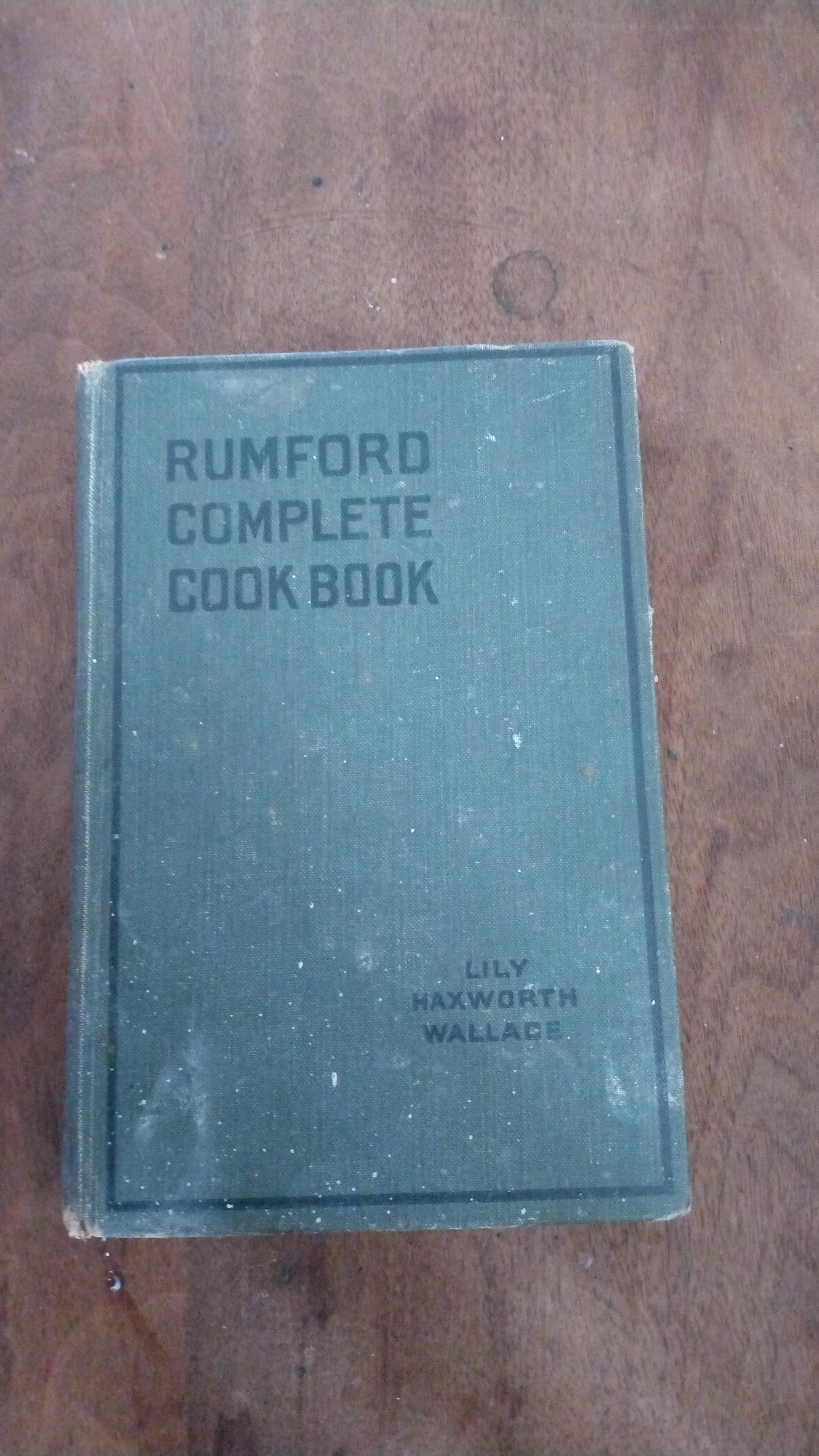
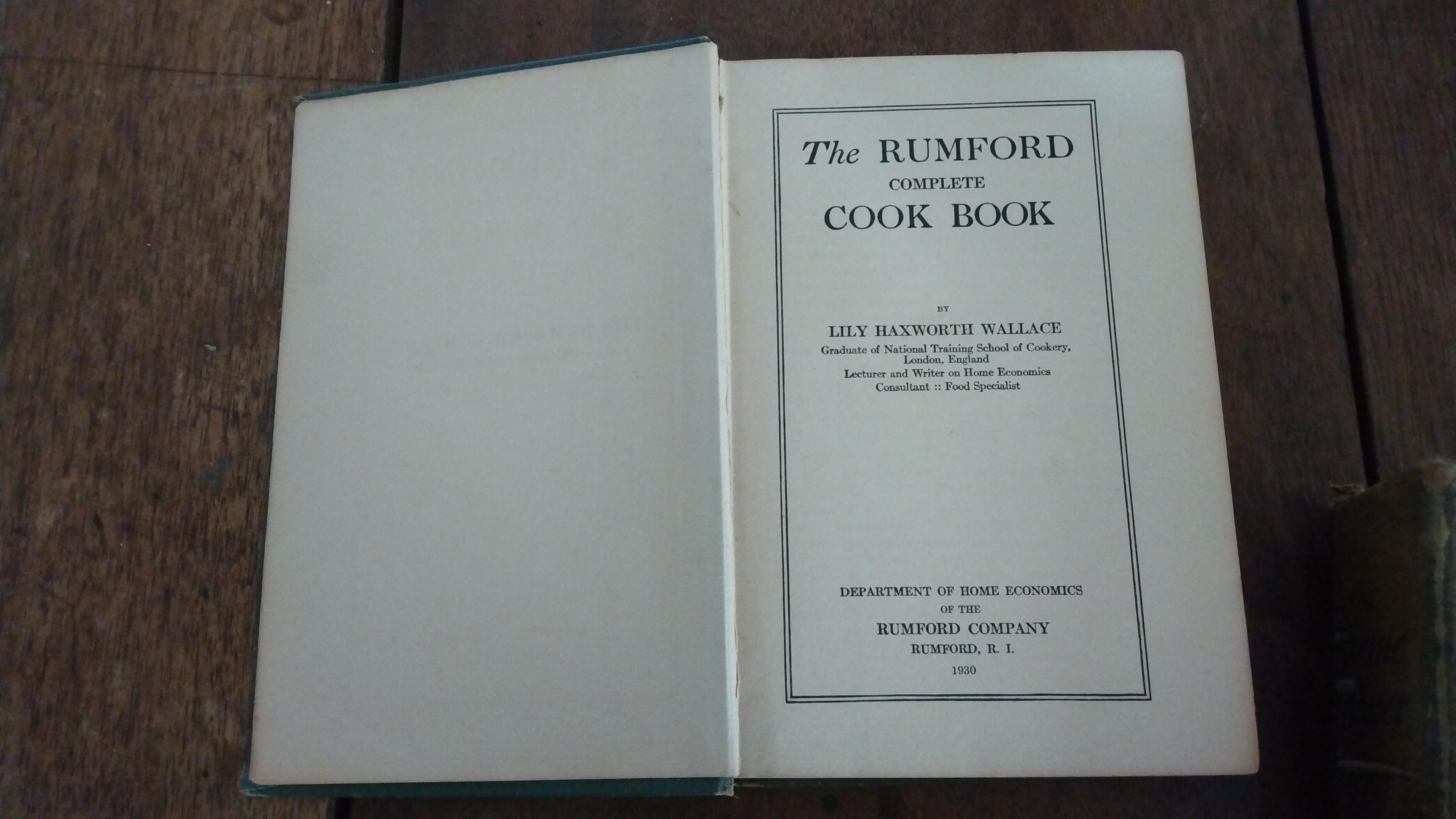
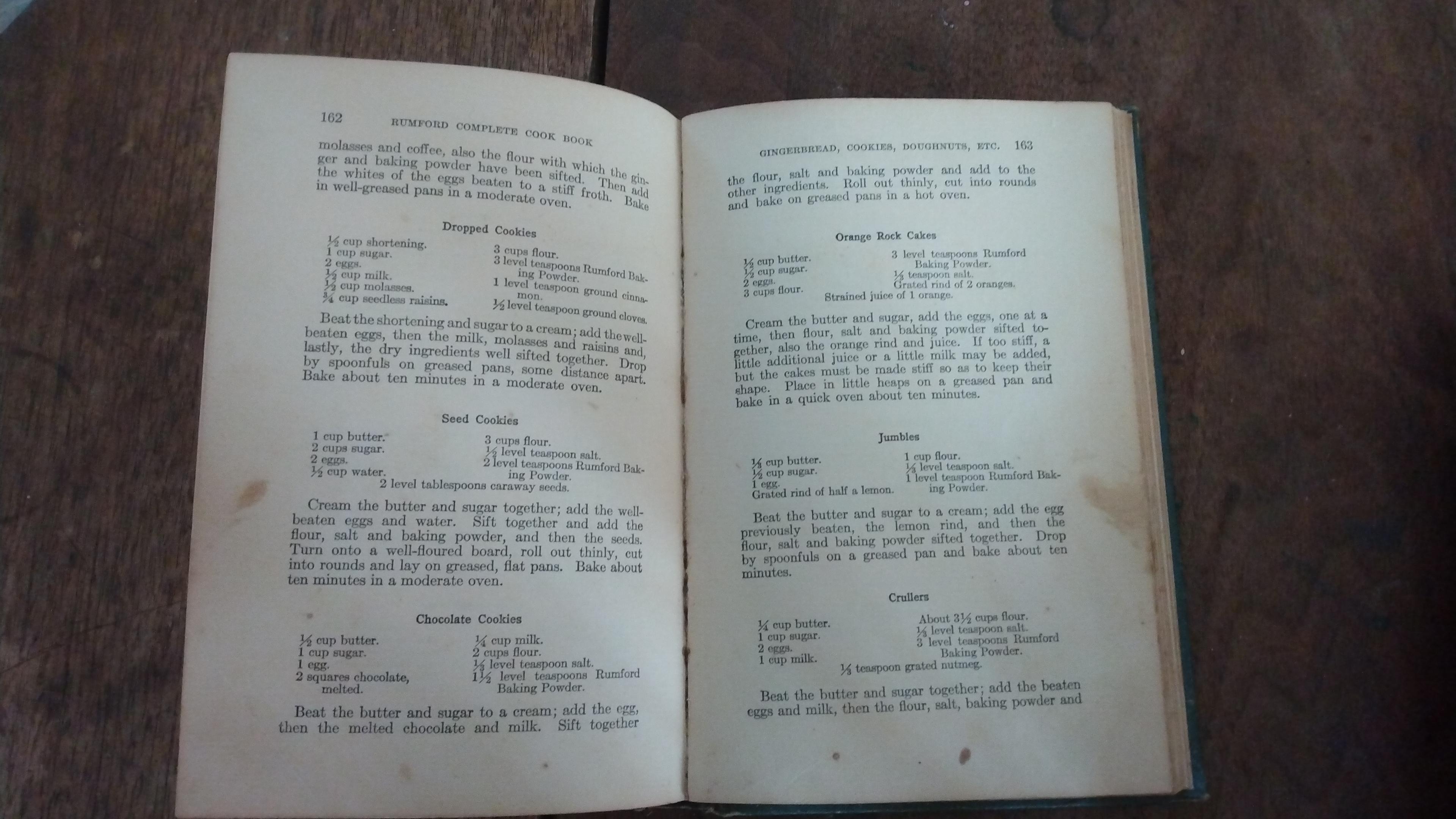
Here's one of my grandmother's cookbooks from 1930 - The Rumford Complete Cookbook by Elizabeth Haxworth Wallace. You can tell my grandmother made a lot of dropped cookies (by the smudges on the recipe pages)!
 D
D
Here's one of my grandmother's cookbooks from 1930 - The Rumford Complete Cookbook by Elizabeth Haxworth Wallace. You can tell my grandmother made a lot of dropped cookies (by the smudges on the recipe pages)!
So, question for you, @stevewfolds (and @ai6yr ) -- what are your favorite #cookbooks?
My top 5
1. Sioux Chef's Indigenous Kitchen (already!)
2. Salt, Fat, Acid, Heat
3. Fannie Farmer's
4. The Festive Foods of Ireland
5. Classical Indian Cooking
I have some pretty old ones from the 1940s and 1950s (my grandmothers), but my favorite older cookbook the Fanny Farmer (1965 reprint of the original) that my great aunt gave me. Some old school stuff in that. And no, I don't have 75+ cookbooks -- probably around 50? (Now I need to do a rough count...). @stevewfolds @ai6yr
@ai6yr So, to be honest, that's how I cook a lot of the time -- "Frankensteining" 2 or 3 recipes to come up with my own. But I also know how to analyze cooking techniques, know how things taste (and what substitutions to use), etc., etc. If I'm learning how to make something I'm not familiar with, I stick to the original recipe for the first time, then muck around with it (sometimes) if I make it again.
One more about #DyePlants...
21 Garden Plants to Use as Natural Dyes
You’ve heard of vegetable and cut flower gardens, but what about dye gardens? Dying yarn and fabrics with plant-based dyes allows you to create beautiful hues and develop a new appreciation for plants. If you’re not sure where to get started, join Briana Yablonski to learn 21 plants you can use as natural dyes.
Written by Briana Yablonski Horticulture review by Sarah Jay Last updated: May 1, 2024
"very so often, a new question strikes me. A few years ago, I found myself wondering how people transformed neutral-colored wool, cotton, and silk into shades of pink, blue, and yellow. I knew I could find synthetic dyes in tie-dye kits and commercial clothing factories, but I wondered how people colored their clothing, rugs, and linens before these products existed. Amazingly, many natural plant dyes can be grown right in our home gardens!
While not all natural dyes come from plants, there are more than a handful of flowers, leaves, and fruit that offer beautiful colors. Since dyeing is a chemical process strongly affected by pH, adding materials like soda and citric acid allows you to use one dye source to create multiple colors.
You’re welcome to experiment with natural plant dyes of any species, but some plants are known to produce particularly vibrant colors. Try dyeing with a few of the following plants to see the range of colors the botanical world offers."
Learn more:
https://www.epicgardening.com/natural-plant-dyes/
#SolarPunkSunday #DIY #FiberArts
#NaturalDyes #Dyes #PlantDyes #Amaranth #BachelorsButtons #BlackWalnut #ButterflyPea #Calendula #Canaigre #Cosmos #Goldenrod #Madder
How to Make #NaturalDyes in Every Color: A Step-by-Step Guide
Grace Waters - December 31, 2023
Excerpt: "Which Ingredients Will Make Which Colors?
You can use practically any plant, produce or spice to make a natural dye. Many of those ingredients are available year-round. Here’s how to make natural dyes with every color under the rainbow.
Red
Produce like raspberries, cherries, cranberries, and pokeberries will make rich dyes. You can also use hibiscus, rose, amaranth, and hollyhock plants. Most deeply red flower petals will produce saturated pigments. Beetroots will make a pink dye that is incredibly vibrant.
Orange
The flower calendula makes for a fantastic natural orange dye. To get that classic, bright color, use carrots or orange peels. Surprisingly, pomegranates can also produce deep orange hues.
Yellow
Tumeric is incredibly vibrant and easily stains. Ginger is another good spice, but it isn’t as bright. Flowers like goldenrod, yarrow, black-eyed Susan, and dandelions produce varying shades of yellow. You can also use lemon peels.
Green
You can use almost any plant’s stems and leaves to make a vibrant green color. Leafy greens like spinach also work well. If you want a very bright shade, you may have to add some blue.
Indigo
Blue flowers like bachelor buttons and Russian sage will create unique, rich hues. Of course, you can also use blueberries for a very dark dye. Red cabbage makes a classic, bright purple color. If you want something more saturated and subtle, use blackberries.
Brown
Red onion skin and #acorns can make light brown or tan dyes. If you want something darker, use #BlackWalnuts or used coffee beans."
Read more:
https://environment.co/how-to-make-natural-dyes/
#SolarPunkSunday #DIY #FiberArts #NaturalDyes #Dyes #Wildflowers #PlantDyes
Beginner’s Guide to Natural Dyes
By Ashley Adamant, Last Updated Feb 22, 2025, Published Oct 30, 2024
"Natural dyes are a fun way to experience the natural world, and plants, mushrooms, lichnes and moss not only decorate our world, they have hidden color inside that can dye fabrics, paper, wood and more. Whether you’re interested in a fun craft to do with your kids or if you’ve always wanted to change the color of your clothes on a whim, I’ll walk you through how to use natural materials to dye your fabrics."
Read more [include reference books!]:
https://practicalselfreliance.com/natural-dyes/
#SolarPunkSunday #DIY #FiberArts #NaturalDyes #Dyes #PlantDyes
The #VerificationScam on #Mastodon has resurfaced. Now they claim to be from #MastodonSafetyTeam. Do NOT click on the links, and report and block.