#ScribesAndMakers 20/02: The alpha male is a misconception perpetuated in popular media that our featured creator works against in her wolf books.
-
#ScribesAndMakers 20/02: The alpha male is a misconception perpetuated in popular media that our featured creator works against in her wolf books. What's a misconception that bothers you in popular media?
Okay, I am going to limit myself here for stories "loosely inspired" by German/European #folklore.
- What's the deal with all the "Disney Princess" protagonists - i.e. viewpoint characters that come from an aristocratic background? Where are the peasant heroes and heroines who win the day thanks to their daring and wit?
- What's the deal with all the "ancestry powers" - i.e. the notion that you are special and have special powers primarily because your ancestors were special and had special powers? In German folklore, all the people who had "innate powers" had them due to the particular time of their birth, _not_ because their ancestors were magical!
- Likewise, German folk tales are _full_ of truly despicable aristocratic villains. Why don't we show the old aristocracy in all its depravity?
Frankly, I sometimes suspect that much of modern fantasy or folklore-inspired media is pro- #DarkEnlightenment propaganda.
-
 P Pteryx the Puzzle Secretary shared this topic
-
#ScribesAndMakers 20/02: The alpha male is a misconception perpetuated in popular media that our featured creator works against in her wolf books. What's a misconception that bothers you in popular media?
Okay, I am going to limit myself here for stories "loosely inspired" by German/European #folklore.
- What's the deal with all the "Disney Princess" protagonists - i.e. viewpoint characters that come from an aristocratic background? Where are the peasant heroes and heroines who win the day thanks to their daring and wit?
- What's the deal with all the "ancestry powers" - i.e. the notion that you are special and have special powers primarily because your ancestors were special and had special powers? In German folklore, all the people who had "innate powers" had them due to the particular time of their birth, _not_ because their ancestors were magical!
- Likewise, German folk tales are _full_ of truly despicable aristocratic villains. Why don't we show the old aristocracy in all its depravity?
Frankly, I sometimes suspect that much of modern fantasy or folklore-inspired media is pro- #DarkEnlightenment propaganda.
Belle in Beauty and the Beast was not an aristocrat. Tina from The Princess and the Frog is a waitress. Moana is debatable - certainly not an aristocrat, anyway. Mulan isn't.
Debatably classed as Disney Princesses: neither Esmerelda nor Tinkerbell are aristocracy.
Not saying your point doesn't stand, just being pedantic.

-
#ScribesAndMakers 20/02: The alpha male is a misconception perpetuated in popular media that our featured creator works against in her wolf books. What's a misconception that bothers you in popular media?
Okay, I am going to limit myself here for stories "loosely inspired" by German/European #folklore.
- What's the deal with all the "Disney Princess" protagonists - i.e. viewpoint characters that come from an aristocratic background? Where are the peasant heroes and heroines who win the day thanks to their daring and wit?
- What's the deal with all the "ancestry powers" - i.e. the notion that you are special and have special powers primarily because your ancestors were special and had special powers? In German folklore, all the people who had "innate powers" had them due to the particular time of their birth, _not_ because their ancestors were magical!
- Likewise, German folk tales are _full_ of truly despicable aristocratic villains. Why don't we show the old aristocracy in all its depravity?
Frankly, I sometimes suspect that much of modern fantasy or folklore-inspired media is pro- #DarkEnlightenment propaganda.
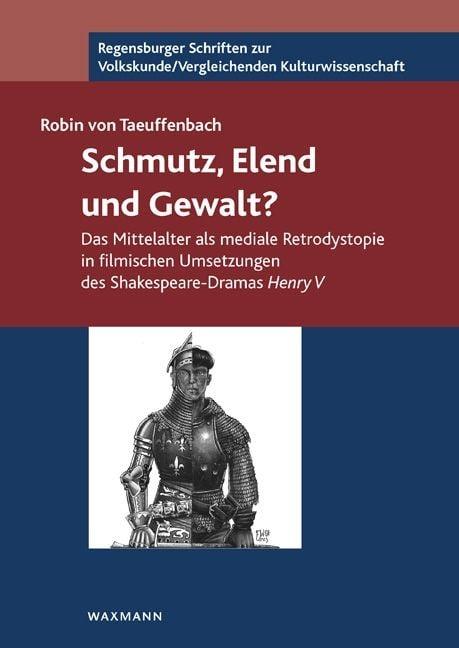
@juergen_hubert Been thinking about this while reading this excellent book. I showed my students film trailers from the 1940s, 1980s and 2010s and discussed how the depiction of Medieval royalty has changed. Comparing many movies over the decades, particularly European and North American productions, it looks like royal protagonists are increasingly shown dressed as commoners (I have collected many examples).
In Monty Python's Holy Grail, the peasants could still note that "he must be the king - he hasn't got shit all over him!" Today, visualizing Medieval class differences seem to be taboo. In the Early Modern era, everyone is in fancy dress (e.g. Bridgerton), in the Middle Ages, everyone is covered in mud (e.g. King and Conqueror). A bit of an exaggeration, I'm sure there are exceptions!
One reason might be the whole "dark & gritty" trend in entertainment, i.e. "realism" means low saturation, "blue filter", ultra-violence, dirt everywhere etc. This applies particularly to depictions of the Middle Ages.
My own theory is that the viewers are expected to empathize with the royal protagonist, and therefore they can't be shown to set themselves apart from the common people. My non-historian students said that a character in plain dress "looks more honest". At the same time, they admitted that royalty are interesting, they are "mysterious". So one way to give a story broad appeal is to choose a royal protagonist who appears to be humble and approachable. Robin von Taeuffenbach notes how the Henry V character becomes successively younger and less aggressive, more passive and more pacifist in each film iteration of Shakespeare's play. Or as my students said when they saw Timothée Chalamet in the trailer to The King (2019): "Naawww!
 "
"
-
@juergen_hubert Been thinking about this while reading this excellent book. I showed my students film trailers from the 1940s, 1980s and 2010s and discussed how the depiction of Medieval royalty has changed. Comparing many movies over the decades, particularly European and North American productions, it looks like royal protagonists are increasingly shown dressed as commoners (I have collected many examples).
In Monty Python's Holy Grail, the peasants could still note that "he must be the king - he hasn't got shit all over him!" Today, visualizing Medieval class differences seem to be taboo. In the Early Modern era, everyone is in fancy dress (e.g. Bridgerton), in the Middle Ages, everyone is covered in mud (e.g. King and Conqueror). A bit of an exaggeration, I'm sure there are exceptions!
One reason might be the whole "dark & gritty" trend in entertainment, i.e. "realism" means low saturation, "blue filter", ultra-violence, dirt everywhere etc. This applies particularly to depictions of the Middle Ages.
My own theory is that the viewers are expected to empathize with the royal protagonist, and therefore they can't be shown to set themselves apart from the common people. My non-historian students said that a character in plain dress "looks more honest". At the same time, they admitted that royalty are interesting, they are "mysterious". So one way to give a story broad appeal is to choose a royal protagonist who appears to be humble and approachable. Robin von Taeuffenbach notes how the Henry V character becomes successively younger and less aggressive, more passive and more pacifist in each film iteration of Shakespeare's play. Or as my students said when they saw Timothée Chalamet in the trailer to The King (2019): "Naawww!
"@ainurelmgren Thanks for that book tip!
I do plan to write a book about the portrayal of nobles in German folklore at some point down the line, and any scholarly discussion of such themes is of interest to me.
-
#ScribesAndMakers 20/02: The alpha male is a misconception perpetuated in popular media that our featured creator works against in her wolf books. What's a misconception that bothers you in popular media?
Okay, I am going to limit myself here for stories "loosely inspired" by German/European #folklore.
- What's the deal with all the "Disney Princess" protagonists - i.e. viewpoint characters that come from an aristocratic background? Where are the peasant heroes and heroines who win the day thanks to their daring and wit?
- What's the deal with all the "ancestry powers" - i.e. the notion that you are special and have special powers primarily because your ancestors were special and had special powers? In German folklore, all the people who had "innate powers" had them due to the particular time of their birth, _not_ because their ancestors were magical!
- Likewise, German folk tales are _full_ of truly despicable aristocratic villains. Why don't we show the old aristocracy in all its depravity?
Frankly, I sometimes suspect that much of modern fantasy or folklore-inspired media is pro- #DarkEnlightenment propaganda.
@juergen_hubert
Disney: perverting. trademarking & copyrighting PD Fairytales since 1937? Sometimes stealing and perverting copyright work like Bambi. Why bother paying a German and let's scrape off the anti-NAZI message.
Also tried to cheat on royalties when they bought Lucas Films.
P. L. Travers wanted nothing to do with Disney after they did her Mary Poppins.
I enjoyed many Disney movies as a kid, but then read originals & learned about the darkness of Walt & perversion of the stories. -
#ScribesAndMakers 20/02: The alpha male is a misconception perpetuated in popular media that our featured creator works against in her wolf books. What's a misconception that bothers you in popular media?
Okay, I am going to limit myself here for stories "loosely inspired" by German/European #folklore.
- What's the deal with all the "Disney Princess" protagonists - i.e. viewpoint characters that come from an aristocratic background? Where are the peasant heroes and heroines who win the day thanks to their daring and wit?
- What's the deal with all the "ancestry powers" - i.e. the notion that you are special and have special powers primarily because your ancestors were special and had special powers? In German folklore, all the people who had "innate powers" had them due to the particular time of their birth, _not_ because their ancestors were magical!
- Likewise, German folk tales are _full_ of truly despicable aristocratic villains. Why don't we show the old aristocracy in all its depravity?
Frankly, I sometimes suspect that much of modern fantasy or folklore-inspired media is pro- #DarkEnlightenment propaganda.
@juergen_hubert
Or in some traditions those with magical powers are not really human. Simply being an aristocrat didn't count. No primogeniture &d no automatic succession in pre-Norman Ireland. The Chiefs (kings) didn't own the land, it belonged to the tribe, or no-one. Henry II (Norman England): Swear intelligence to me and you & your 1st born males will be Lords and own all the land.
Grianne O'Malley wasn't a pirate but the last true Gaelic ruler (king/Queen = Rí / Rígan) in Ireland, elected. -
@juergen_hubert
Or in some traditions those with magical powers are not really human. Simply being an aristocrat didn't count. No primogeniture &d no automatic succession in pre-Norman Ireland. The Chiefs (kings) didn't own the land, it belonged to the tribe, or no-one. Henry II (Norman England): Swear intelligence to me and you & your 1st born males will be Lords and own all the land.
Grianne O'Malley wasn't a pirate but the last true Gaelic ruler (king/Queen = Rí / Rígan) in Ireland, elected.@juergen_hubert
References
https://en.wikipedia.org/wiki/Mary_Poppins_(film)#Legacyhttps://en.wikipedia.org/wiki/Bambi#Copyright
Though written in 1923, it was perceived to be a political allegory on the treatment of Jews in Europe, so the book was banned by Nazi Germany in 1935. It was also quite dark and for adults. Disney sugared it.Read More: https://www.looper.com/987943/the-untold-truth-of-bambi/
O'Malley met QEI and they conversed in Latin.
There are many non-fictional accounts. Irish records are lost, so we only have the English version. -
@juergen_hubert
References
https://en.wikipedia.org/wiki/Mary_Poppins_(film)#Legacyhttps://en.wikipedia.org/wiki/Bambi#Copyright
Though written in 1923, it was perceived to be a political allegory on the treatment of Jews in Europe, so the book was banned by Nazi Germany in 1935. It was also quite dark and for adults. Disney sugared it.Read More: https://www.looper.com/987943/the-untold-truth-of-bambi/
O'Malley met QEI and they conversed in Latin.
There are many non-fictional accounts. Irish records are lost, so we only have the English version.I read the original "Bambi" novel when I was young, though undoubtedly many of the nuances eluded me at the time.