The SAVE act targets people who've changed their name *for any reason*.
-
@ruivo I'm a US citizen, as were my parents, and their parents, going back about as long as there's been a US.
I didn't take my spouse's name when I got married, but my birth certificate doesn't match my state ID or passport. I legally changed my name shortly after I became an adult, so I could get rid of my dad's last name (and my first name, because it was dumb).
At the time, I didn't have enough money to pay to update it everywhere, so I just never did.
I have a valid state ID and passport (well, my state ID has a nonbinary gender marker on it, so who knows if it'll be honored outside of Washington state


 ️ these days).
By the wording of the SAVE act, I don't think I'd be eligible to vote (for the first time since I turned 18).
-
@FaithinBones they should already do that

But more importantly, we should call out this legislation for what it is—an attempt to lock out non-MAGA voters and rig an election.
-
@FaithinBones they should already do that
But more importantly, we should call out this legislation for what it is—an attempt to lock out non-MAGA voters and rig an election.
-
@ruivo I'm a US citizen, as were my parents, and their parents, going back about as long as there's been a US.
I didn't take my spouse's name when I got married, but my birth certificate doesn't match my state ID or passport. I legally changed my name shortly after I became an adult, so I could get rid of my dad's last name (and my first name, because it was dumb).
At the time, I didn't have enough money to pay to update it everywhere, so I just never did.
I have a valid state ID and passport (well, my state ID has a nonbinary gender marker on it, so who knows if it'll be honored outside of Washington state
️ these days).By the wording of the SAVE act, I don't think I'd be eligible to vote (for the first time since I turned 18).
@amydiehl @alice I'm not defending it. Any kind of extra documentation asked will raise barriers. Even if you carry paperwork proving change it'll do exactly what they want: make it more difficult to vote for specific demographics. People forgetting to bring, not knowing, losing it, expired and so on. Just pointing out that first generation citizens (which I assume 'immigrants' meant there) aren't likely (again, not everyone) to be impacted as much.
-
@amydiehl @alice I'm not defending it. Any kind of extra documentation asked will raise barriers. Even if you carry paperwork proving change it'll do exactly what they want: make it more difficult to vote for specific demographics. People forgetting to bring, not knowing, losing it, expired and so on. Just pointing out that first generation citizens (which I assume 'immigrants' meant there) aren't likely (again, not everyone) to be impacted as much.
-
@the_wub @alice @amydiehl Births are registered at the local level (county/parrish, below US state), but they confer citizenship at the federal level. The US federal government is the entity which issues passports and social security numbers (basically our national ID number for financial purposes). Driver licenses and most other non-passport IDs are managed by the US states. Depending on who is asking for identity and why, we may need a birth/naturalization certificate, passport, social security number, driver license/state ID number, or a paper utility bill (sometimes needed to prove residency for state and local elections).
US states run their own elections, so rules for voting are all over the place (which is why the USA doesn’t meet the minimum standards for election monitoring by the Carter Center).
@bob_zim @alice @amydiehl "SAVE Act would require birth cert or passport that matches voters legal name. "
So where and how is a person's "legal name" recorded?
In the UK there is the concept of "known as" which means that you can end up being called something other than is on your passport.
You can change the name on your passport without changing your legal name by deed poll to match it.
Not advisable as I found out trying to help a relative but I believe even now it is still possible.
-
@bob_zim @alice @amydiehl "SAVE Act would require birth cert or passport that matches voters legal name. "
So where and how is a person's "legal name" recorded?
In the UK there is the concept of "known as" which means that you can end up being called something other than is on your passport.
You can change the name on your passport without changing your legal name by deed poll to match it.
Not advisable as I found out trying to help a relative but I believe even now it is still possible.
-
@the_wub @alice @amydiehl “Legal name” in this case is talking about the voter registration. We register to vote at the US state level. The registration involves name and address (to determine which county, city, town, etc. elections we vote in). We get a registration card (mine arrived two days ago) which lists all of the information about which districts we vote in, and we’re added to the voter rolls available to polling places.
Since US states run their own elections, they all have different rules about how to determine who someone is so they can use their ballot. Many have been adding photo ID requirements, and the name on the photo ID has to match the name on the voter roll. This proposed law is saying beyond just a photo ID, you also have to prove you’re a citizen using documentation with a name which matches the photo ID and the voter registration.
A passport is both a photo ID and proof of citizenship, so it fills both requirements. Everybody else would need to bring a birth/naturalization certificate. When people change their names, they often don’t go down to the county registrar’s office to get a new copy of their birth certificate. They usually just keep the original one and a copy of the name change documentation, as that’s enough for everything else we use a birth certificate for.
It’s ultimately a poll tax, just like the photo ID requirement. Blatantly unconstitutional, but we have an illegitimate Supreme Court.
-
@yPhil there's already a law against being a criminal, that's what made them a criminal. There are also already laws against election tampering and fraud.
Two states let felons vote while in prison.
If they've "paid their dues", then most places (eventually) let them vote again anyway.
Blocking upwards of a third of the population from voting because it might stop a handful of "criminals" is fucking ridiculous. If we wanted to do *that* and have fewer false-positives, we could just block straight men from voting—they make up ~93% of inmates¹—and that's with the fact that queer folx have arrest rates ~2.3× higher than straight people² (because the system is fucking busted).
Also, your argument is bullshit.
¹ https://www.prisonpolicy.org/reports/beyondthecount.html
-
@the_wub @alice @amydiehl “Legal name” in this case is talking about the voter registration. We register to vote at the US state level. The registration involves name and address (to determine which county, city, town, etc. elections we vote in). We get a registration card (mine arrived two days ago) which lists all of the information about which districts we vote in, and we’re added to the voter rolls available to polling places.
Since US states run their own elections, they all have different rules about how to determine who someone is so they can use their ballot. Many have been adding photo ID requirements, and the name on the photo ID has to match the name on the voter roll. This proposed law is saying beyond just a photo ID, you also have to prove you’re a citizen using documentation with a name which matches the photo ID and the voter registration.
A passport is both a photo ID and proof of citizenship, so it fills both requirements. Everybody else would need to bring a birth/naturalization certificate. When people change their names, they often don’t go down to the county registrar’s office to get a new copy of their birth certificate. They usually just keep the original one and a copy of the name change documentation, as that’s enough for everything else we use a birth certificate for.
It’s ultimately a poll tax, just like the photo ID requirement. Blatantly unconstitutional, but we have an illegitimate Supreme Court.
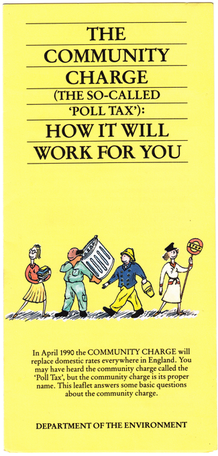
@bob_zim @alice @amydiehl We had a poll tax in the UK at the end of 1980s/early 1990s. Implicit in the law was that it would force people to remove themselves from the electoral roll in order to avoid paying the tax.
The only good that came out of it was that the opposition to the tax forced the resignation of Prime Minister Thatcher - an odious pro-Pinochet, neo-liberal, monetarist, Reaganite.
So maybe this tale gives some hope for you folks in the US.
-
@bob_zim @alice @amydiehl We had a poll tax in the UK at the end of 1980s/early 1990s. Implicit in the law was that it would force people to remove themselves from the electoral roll in order to avoid paying the tax.
The only good that came out of it was that the opposition to the tax forced the resignation of Prime Minister Thatcher - an odious pro-Pinochet, neo-liberal, monetarist, Reaganite.
So maybe this tale gives some hope for you folks in the US.
-
@the_wub @alice @amydiehl A lot of the US is heavily racist. After slavery was limited to prisoners, states used a variety of techniques to prevent Black people from voting. Poll taxes and poll tests (literacy tests, civics tests with biased answers) were favorites. The Voting Rights Act of 1965 explicitly made poll taxes illegal for federal elections. The Supreme Court of the United States also declared poll taxes unconstitutional in 1966.
Incidentally, the literacy tests are where the terms “grandfather clause” and “grandfathered in” come from. Many states allowed a man to skip the literacy test and vote if his father or grandfather had voted before 1867, a date selected to exclude most Black men.
-
@yPhil I'm not your honey, nor did I say "only" anywhere in my post. I even included "mostly" just to head off diversionary comments like yours.
You seem to be putting words in my mouth while intentionally missing the point of my original post.
But maybe if you walk me through it in baby steps, using smaller words I'll understand, then we can engineer this thing together, sweetheart.
-
@yPhil I'm not your honey, nor did I say "only" anywhere in my post. I even included "mostly" just to head off diversionary comments like yours.
You seem to be putting words in my mouth while intentionally missing the point of my original post.
But maybe if you walk me through it in baby steps, using smaller words I'll understand, then we can engineer this thing together, sweetheart.
@alice @amydiehl Thank you for your kind answer, no srsly ; so OK (in retrospect baby steps can sound condescending, it's actually not but I'm sorry if it... Nahh, you understood) so OK, we're on the same page.
Name changing is a problem, in a society basically based upon it. I'm not talking social credit here, I'm talking basic secular rules. You are supposed to be able to ask about/search the registers/google the person in front of you and know who they are. Can we agree on that?
-
@the_wub @alice @amydiehl A lot of the US is heavily racist. After slavery was limited to prisoners, states used a variety of techniques to prevent Black people from voting. Poll taxes and poll tests (literacy tests, civics tests with biased answers) were favorites. The Voting Rights Act of 1965 explicitly made poll taxes illegal for federal elections. The Supreme Court of the United States also declared poll taxes unconstitutional in 1966.
Incidentally, the literacy tests are where the terms “grandfather clause” and “grandfathered in” come from. Many states allowed a man to skip the literacy test and vote if his father or grandfather had voted before 1867, a date selected to exclude most Black men.
-
@alice @amydiehl Thank you for your kind answer, no srsly ; so OK (in retrospect baby steps can sound condescending, it's actually not but I'm sorry if it... Nahh, you understood) so OK, we're on the same page.
Name changing is a problem, in a society basically based upon it. I'm not talking social credit here, I'm talking basic secular rules. You are supposed to be able to ask about/search the registers/google the person in front of you and know who they are. Can we agree on that?
@yPhil I don't think we are on the same page though, as I don't see name changing as the problem. In fact, I don't care what anyone's "real" name is. Of all my friends both online and in person, I only know the name on the birth certificate of *maybe* five or six—for *everyone* else, I only know what name they've asked me to call them. Some of them have changed the name they've asked me to call them, some have done so multiple times. Hell, I think there are less than half a dozen living people who know me who have any idea what my "real" name is. And it has never mattered.
Many of the things I do: political and social activism, suicide prevention outreach, being a niche internet micro-celebrity, creating adult content, I can only do effectively because people *don't* know who I am or where I live (and vice versa). I got fucking death threats for calling for a Tesla boycott, and again for talking about gun control, and again for talking about queer community building, and so on. If I could be easily searched up, then I couldn't do what I do, because I'd receive violence at the hands of some pissed off, entitled, man.
tl;dr: we could solve the "prove who you are" issue in ways that don't conveniently target and disfranchise women and minorities right before midterm elections.
-
@yPhil I don't think we are on the same page though, as I don't see name changing as the problem. In fact, I don't care what anyone's "real" name is. Of all my friends both online and in person, I only know the name on the birth certificate of *maybe* five or six—for *everyone* else, I only know what name they've asked me to call them. Some of them have changed the name they've asked me to call them, some have done so multiple times. Hell, I think there are less than half a dozen living people who know me who have any idea what my "real" name is. And it has never mattered.
Many of the things I do: political and social activism, suicide prevention outreach, being a niche internet micro-celebrity, creating adult content, I can only do effectively because people *don't* know who I am or where I live (and vice versa). I got fucking death threats for calling for a Tesla boycott, and again for talking about gun control, and again for talking about queer community building, and so on. If I could be easily searched up, then I couldn't do what I do, because I'd receive violence at the hands of some pissed off, entitled, man.
tl;dr: we could solve the "prove who you are" issue in ways that don't conveniently target and disfranchise women and minorities right before midterm elections.
@alice So commit - possibly publicly reported - crime, change name, rinse and repeat?
You dont seem to care about the issue at hand (ie "not your personal case") that you may be confusing with the notion of online anonymity, a common mistake.
> we could solve the "prove who you are" issue in ways that don't conveniently target and disfranchise women and minorities right before midterm elections.
How?
-
The SAVE act targets people who've changed their name *for any reason*. Ya know who's done that?
- Married women
- Trans & nonbinary folx
- ImmigrantsYou know which US citizens that leaves?
Mostly white men.
The SAVE act isn't trying to save anything other than patriarchy and fascism.
-
The SAVE act targets people who've changed their name *for any reason*. Ya know who's done that?
- Married women
- Trans & nonbinary folx
- ImmigrantsYou know which US citizens that leaves?
Mostly white men.
The SAVE act isn't trying to save anything other than patriarchy and fascism.
-
 P Pteryx the Puzzle Secretary shared this topic