An interesting piece about the #ttrpg media landscape: https://personable.blog/media-crowdfunding/
-
@Printdevil @pteryx @Taskerland I don't want to object to people enjoying that style of gaming. I just feel sad that some people don't know about the broader range of possibilities, especially when they clearly want to play in a way D&D doesn't accommodate well.
@foolishowl @Printdevil @Taskerland
What bugs me the most is that *because* of a combination D&D tunnel vision and people's refusal to learn new systems (which is less about "system mastery" as *I* understand the term and more about sheer laziness combined with a failure to understand the concept of "right tool for the right job"), people *try to design games* that are supposed to be very different from D&D, yet use 5e mechanics because they don't understand the distinction between them and RP. -
@foolishowl @Printdevil @Taskerland
What bugs me the most is that *because* of a combination D&D tunnel vision and people's refusal to learn new systems (which is less about "system mastery" as *I* understand the term and more about sheer laziness combined with a failure to understand the concept of "right tool for the right job"), people *try to design games* that are supposed to be very different from D&D, yet use 5e mechanics because they don't understand the distinction between them and RP.That's the exact silo I find chatting about games at the local shop. You get so far with people and then.. 5e just is the cognitive block.
Dogmatic entrenchment they call it in problem solving.
-
The whole combat effectiveness type approach to gaming is why I find it hard to chat to local gamers, in a gaming shop, who are gaming.
Because it just looks like an RPG
But it isn't.
@Printdevil @pteryx @foolishowl @Taskerland This is so essential and needs to be more at the front of everyone's minds.
So many people who would love ttrpgs get excited to "try DnD!" and then glaze over when you try to explain the action economy to them. They'd love to get back to talking to a merchant and making plot decisions, but they're stuck 50% or more of the time playing something that's more Warhammer than RP.
It's fine that DnD is that. But it alienates newbies who SHOULD be here.
-
@Printdevil @pteryx @foolishowl @Taskerland This is so essential and needs to be more at the front of everyone's minds.
So many people who would love ttrpgs get excited to "try DnD!" and then glaze over when you try to explain the action economy to them. They'd love to get back to talking to a merchant and making plot decisions, but they're stuck 50% or more of the time playing something that's more Warhammer than RP.
It's fine that DnD is that. But it alienates newbies who SHOULD be here.
@Printdevil @pteryx @foolishowl @Taskerland I especially hate that DnD is the defacto gateway for new people to the hobby, when something like pbta would be more user friendly AND a better representation of the hobby than 5e.
-
@Printdevil @pteryx @foolishowl @Taskerland I especially hate that DnD is the defacto gateway for new people to the hobby, when something like pbta would be more user friendly AND a better representation of the hobby than 5e.
@humanadverb @Printdevil @foolishowl @Taskerland
It doesn't exactly help that a lot of people with only a casual understanding don't understand that "D&D" is not the generic term for a roleplaying game. As I've said before, people using "D&D" to refer to *all* TTRPGs rather than only to D&D-like ones grates on me, and strikes me as like using "Kleenex" to refer to all disposable paper products, from envelopes to sticky notes, rather than just tissues. -
@humanadverb @Printdevil @foolishowl @Taskerland
It doesn't exactly help that a lot of people with only a casual understanding don't understand that "D&D" is not the generic term for a roleplaying game. As I've said before, people using "D&D" to refer to *all* TTRPGs rather than only to D&D-like ones grates on me, and strikes me as like using "Kleenex" to refer to all disposable paper products, from envelopes to sticky notes, rather than just tissues.@pteryx @Printdevil @foolishowl @Taskerland Nice.
Seriously, "it's like calling all paper products 'Kleenex'" is such a perfect summary of what's happening here.
-
That's the exact silo I find chatting about games at the local shop. You get so far with people and then.. 5e just is the cognitive block.
Dogmatic entrenchment they call it in problem solving.
@Printdevil @foolishowl @Taskerland
And again, this isn't even because they've achieved what I'd consider system mastery.What I'd call system mastery involves, to give a 3.5 example... being able to casually refer to an "oil of mending", an item that has never seen print, because you know that oils are the topical variant of potions in the rules, Mending is a cantrip in the rules that perfectly fixes an object with a single clean fracture, and those who can't cast spells would want to do that.
-
@Printdevil @foolishowl @Taskerland
And again, this isn't even because they've achieved what I'd consider system mastery.What I'd call system mastery involves, to give a 3.5 example... being able to casually refer to an "oil of mending", an item that has never seen print, because you know that oils are the topical variant of potions in the rules, Mending is a cantrip in the rules that perfectly fixes an object with a single clean fracture, and those who can't cast spells would want to do that.
@Printdevil @foolishowl @Taskerland
Or, to give a second such example of my idea of system mastery... looking at the Magewright NPC class from D&D 3.5's Eberron Campaign Setting on one hand, a list of 1st-level spells from Pathfinder 1e on the other, and coming to the conclusion that the spells Ant Haul, Fastidiousness, and Invisibility Alarm should be added to the Magewright spell list, because those are utility spells with working-class applications, which is what Magewright is all about. -
@Printdevil @foolishowl @Taskerland
Or, to give a second such example of my idea of system mastery... looking at the Magewright NPC class from D&D 3.5's Eberron Campaign Setting on one hand, a list of 1st-level spells from Pathfinder 1e on the other, and coming to the conclusion that the spells Ant Haul, Fastidiousness, and Invisibility Alarm should be added to the Magewright spell list, because those are utility spells with working-class applications, which is what Magewright is all about.@pteryx @Printdevil @Taskerland I kind of meant to point to system mastery in the sense that it's something valued at all.
As in, I've seen it said of some narrative-style games that it's not really necessary to understand the rules, it just helps things go more smoothly if you do. Some rules light systems are intended to be too simple and consistent for system mastery to be the interesting part. Some OSR systems, I suspect that confusion is an intentional part of the experience.
-
@pteryx @Printdevil @Taskerland I kind of meant to point to system mastery in the sense that it's something valued at all.
As in, I've seen it said of some narrative-style games that it's not really necessary to understand the rules, it just helps things go more smoothly if you do. Some rules light systems are intended to be too simple and consistent for system mastery to be the interesting part. Some OSR systems, I suspect that confusion is an intentional part of the experience.
@foolishowl @Printdevil @Taskerland
It seems a bit disingenuous to conflate simply knowing the rules at all with "system mastery". It furthermore seems to be a conceit unique to TTRPGs that they can be, or even in some people's opinion *should* be, played without knowing or thinking about the rules. I'm not necessarily calling that a bad thing, but it *is* something that sticks out as different from any other kind of game. -
@foolishowl @Printdevil @Taskerland
It seems a bit disingenuous to conflate simply knowing the rules at all with "system mastery". It furthermore seems to be a conceit unique to TTRPGs that they can be, or even in some people's opinion *should* be, played without knowing or thinking about the rules. I'm not necessarily calling that a bad thing, but it *is* something that sticks out as different from any other kind of game.RPGs are a curious magical thing. Gossmer ideas often handled by clowns. Modern gaming very much a curate's egg.
-
@foolishowl @Printdevil @Taskerland
It seems a bit disingenuous to conflate simply knowing the rules at all with "system mastery". It furthermore seems to be a conceit unique to TTRPGs that they can be, or even in some people's opinion *should* be, played without knowing or thinking about the rules. I'm not necessarily calling that a bad thing, but it *is* something that sticks out as different from any other kind of game.@pteryx @Printdevil @Taskerland What I mean is, part of what makes D&D "sticky" is that a lot of "table talk" concerns synergies between abilities and the like. That's fairly common with strategy games, trading card games, and some sports, but a lot less common with other role-playing games.
-
@pteryx @Printdevil @Taskerland What I mean is, part of what makes D&D "sticky" is that a lot of "table talk" concerns synergies between abilities and the like. That's fairly common with strategy games, trading card games, and some sports, but a lot less common with other role-playing games.
@foolishowl @Printdevil @Taskerland
Ahh, I see what you're getting at. Notably, one of the big changes in D&D and its culture that roughly coincided with the shift from TSR to WotC (though possibly coincidentally, as the Player's Option stuff and even some early 3.0 planning predates that) was a shift from optimization being treated as entirely immature, selfish, and shameful to being encouraged. And I definitely see how that can be a turnoff.1/2
-
@foolishowl @Printdevil @Taskerland
Ahh, I see what you're getting at. Notably, one of the big changes in D&D and its culture that roughly coincided with the shift from TSR to WotC (though possibly coincidentally, as the Player's Option stuff and even some early 3.0 planning predates that) was a shift from optimization being treated as entirely immature, selfish, and shameful to being encouraged. And I definitely see how that can be a turnoff.1/2
@foolishowl @Printdevil @Taskerland
Though I'd call optimization more akin to fire: you can do great things with it, but only if you understand its danger and use it carefully, responsibly, and in ways that take everyone else into account. Use it recklessly and you can burn down the campaign. Treat it like the entire game and, well, you end up in a wasteland.2/2
-
@foolishowl @Printdevil @Taskerland
Ahh, I see what you're getting at. Notably, one of the big changes in D&D and its culture that roughly coincided with the shift from TSR to WotC (though possibly coincidentally, as the Player's Option stuff and even some early 3.0 planning predates that) was a shift from optimization being treated as entirely immature, selfish, and shameful to being encouraged. And I definitely see how that can be a turnoff.1/2
I think it was CCGs. Those completely grabbed roleplayers and got them hooked on gambling like you wouldn't believe. I can't find people into "roleplaying" these days who don't love playing with the CCG decks that they paid money for (for some reason) and sit there hoping randomly drawing cards will make them win. WotC's success was owed to Magic the Gathering (and lack of enforcement of gambling regulations), so that's the connection. The company got enough bank to buy TSR, through the same technique that trained roleplayers to value optimizing, since that's how you play CCGs.
Like seriously, my first real gaming group started that shit and I dunno why I was immune. I'd try to make up like, stories about what was happening in the game, with the lands and the creatures and everyone else just ignored me and was like "I'm going to tap 2 mountains and a plains to bring out the etc" and nothing but that forever.
CC: @foolishowl@social.coop @Printdevil@dice.camp @Taskerland@dice.camp -
The whole combat effectiveness type approach to gaming is why I find it hard to chat to local gamers, in a gaming shop, who are gaming.
Because it just looks like an RPG
But it isn't.
Yeah, exactly that. You have to actually Play a Role at some point or you're just wargaming. Which is fine, but it's not roleplaying.
CC: @pteryx@dice.camp @foolishowl@social.coop @Taskerland@dice.camp -
I think it was CCGs. Those completely grabbed roleplayers and got them hooked on gambling like you wouldn't believe. I can't find people into "roleplaying" these days who don't love playing with the CCG decks that they paid money for (for some reason) and sit there hoping randomly drawing cards will make them win. WotC's success was owed to Magic the Gathering (and lack of enforcement of gambling regulations), so that's the connection. The company got enough bank to buy TSR, through the same technique that trained roleplayers to value optimizing, since that's how you play CCGs.
Like seriously, my first real gaming group started that shit and I dunno why I was immune. I'd try to make up like, stories about what was happening in the game, with the lands and the creatures and everyone else just ignored me and was like "I'm going to tap 2 mountains and a plains to bring out the etc" and nothing but that forever.
CC: @foolishowl@social.coop @Printdevil@dice.camp @Taskerland@dice.camp@cy @foolishowl @Printdevil @Taskerland
Not sure how gambling addiction (or demonization of all card-playing as equivalent to risking money) really relates to optimization, but I can certainly see how deckbuilding does. Though video games are arguably a better medium for just scratching the powergaming itch; they can get away with more intricate systems to exploit than any analog game could ever hope to match.Even though I play and like the 3.x games, I still want *roleplaying* in my TTRPGs.
-
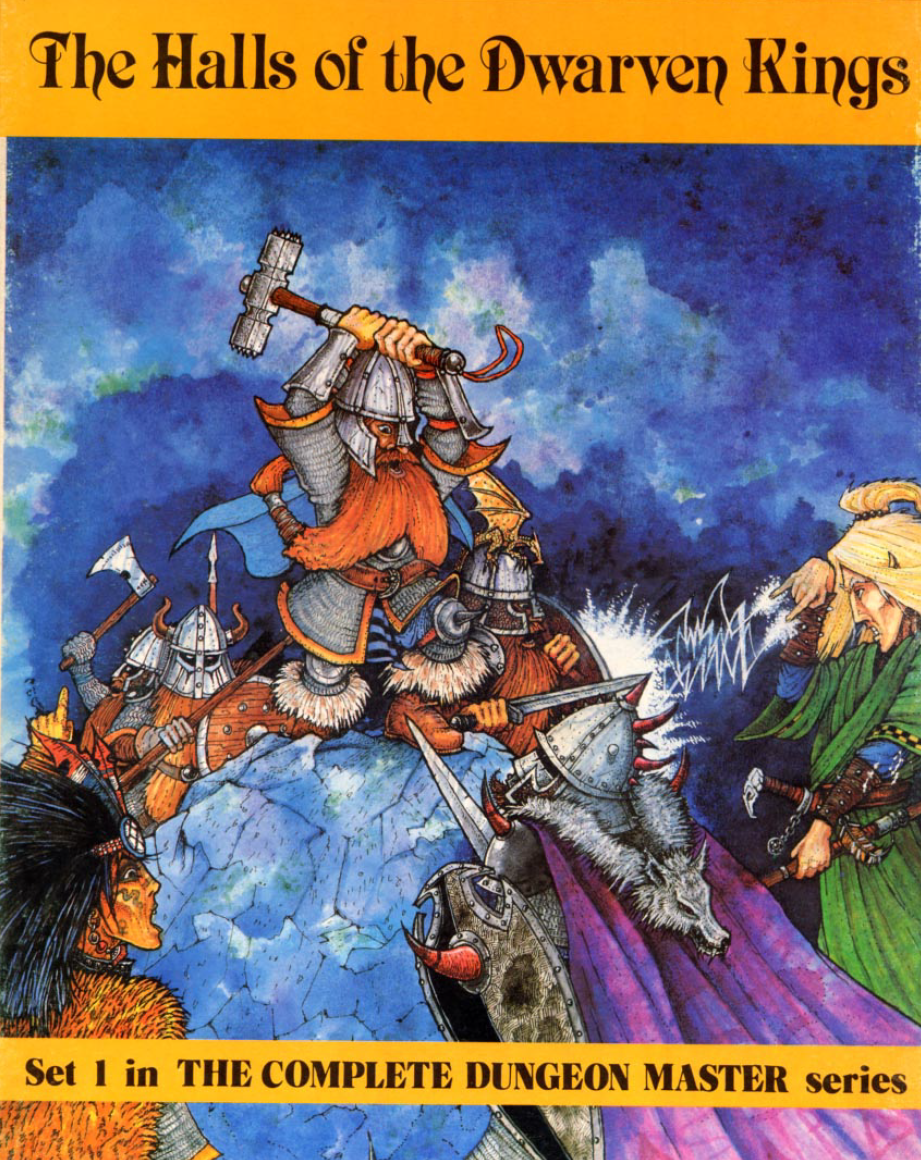
Unsurprisingly I have most of those.
Including the box of the Dwarven Mines.
Perhaps it wasn't my mother, maybe @Printdevil stole them.
-
@Printdevil Next time I come over you can arrange that we play this in the FLGS.
-
@cy @foolishowl @Printdevil @Taskerland
Not sure how gambling addiction (or demonization of all card-playing as equivalent to risking money) really relates to optimization, but I can certainly see how deckbuilding does. Though video games are arguably a better medium for just scratching the powergaming itch; they can get away with more intricate systems to exploit than any analog game could ever hope to match.Even though I play and like the 3.x games, I still want *roleplaying* in my TTRPGs.
CCGs specifically, you have to pay money to try to get the "rare" cards. I don't think it's true of card games in general. Never saw a friend group get taken over by a ravenous appetite for Bridge, though I'm sure it's happened before.
CC: @foolishowl@social.coop @Printdevil@dice.camp @Taskerland@dice.camp -
 T Moreau Vazh shared this topic